Embryo grading explained – what do those numbers and letters really mean?

Here, we break down what embryo grading really represents, how it is used in IVF laboratories, and what it means – and does not mean – for your chances of success.

What is embryo grading?

Embryo grading is a system embryologists use to describe the appearance of an embryo under the microscope at a specific moment in time. It allows us to make informed decisions about which embryos to transfer or freeze, and to communicate clearly within the laboratory team when assessing embryo development.

Importantly, embryo grading is a descriptive tool rather than a guarantee of outcome. IVF laboratories may use slightly different grading systems, which means embryo grades can vary between clinics – even clinics located within the same state – and are not always directly comparable. Understanding what grading does and does not tell us can help you feel more informed and reassured throughout your IVF journey.

Why is so much attention given to embryo grading?

It’s natural to want something tangible to hold onto during IVF, and embryo grades can feel like a clear point of reference. Much like our early educational experiences, receiving a ‘grade’ can feel like an assessment of performance. Many people assume that a higher grade means a better embryo (and therefore a higher chance of success), while a lower grade suggests the opposite.

While this interpretation is understandable, it isn’t entirely accurate. There are many factors involved in embryo development and implantation, and grading alone cannot capture them all.

Embryo grading is not a prediction tool; it is an observation tool. It tells us what an embryo looks like at a particular point in time, not whether it will implant or result in a pregnancy. Every viable embryo, regardless of grade, has the potential to result in a pregnancy.

In our many years of experience in IVF laboratories, we have seen high-grade embryos that did not implant, and lower-grade embryos that went on to become healthy babies. While grading helps us prioritise embryos for transfer or freezing at that moment, it is only one piece of a much larger picture.

When do we grade embryos?

Embryos are grown in the Newlife IVF laboratory for up to six days after fertilisation. By day five or six, embryos ideally reach the blastocyst stage, which marks a critical milestone in development.

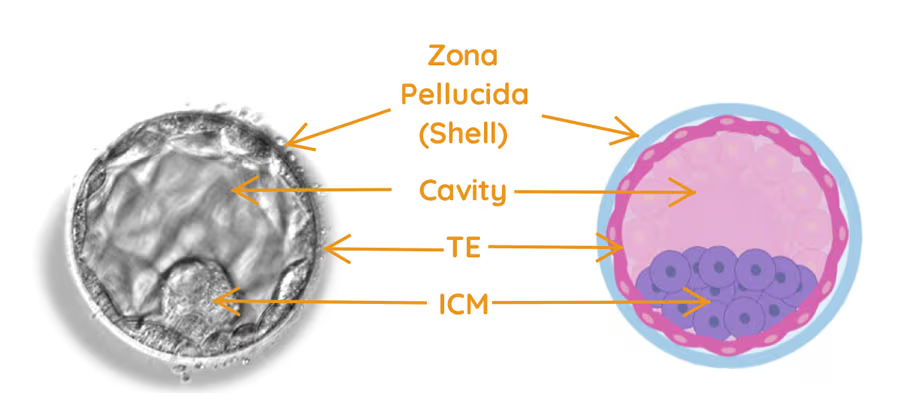
At this stage, the embryo has developed into many interacting cells, and for the first time, we can clearly identify three distinct structures:

  • Inner cell mass (ICM): A cluster of cells inside the embryo that will eventually form the baby
  • Trophectoderm (TE): The outer layer of cells that will develop into the placenta, which supports the baby during pregnancy
  • Blastocoel: A fluid-filled cavity that allows the embryo to expand.

A photographic image of a blastocyst (left) positioned next to a graphic representation of a blastocyst (right). The images show the types of cells that go on to become an embryo proper (foetus), including the zona pellucida (shell), cavity, trophectoderm cells (TE) and inner cell mass (ICM).

How does blastocyst grading work?

Blastocyst grading assesses three main features: the stage of expansion, the characteristics of the inner cell mass, and the characteristics of the trophectoderm. Each component is graded separately, as outlined below.

Expansion stage

The expansion stage refers to the size of the blastocyst and how far it has progressed in breaking free from its protective outer shell, known as the zona pellucida. As the blastocyst grows, it needs to thin and eventually break through this shell in a process called hatching.

Expansion is categorised into six stages:

  • Stage 1: Early blastocyst development, where a small fluid cavity is just beginning to form
  • Stage 2: Early expanding blastocyst, with a growing cavity but still relatively small within the shell
  • Stage 3: Expanded blastocyst, where the cavity is larger and the embryo occupies more space, but hatching has not yet begun
  • Stage 4: Fully expanded blastocyst, filling most of the shell, which has thinned significantly
  • Stage 5: Beginning to hatch, with part of the embryo emerging through the shell
  • Stage 6: Fully hatched, where the embryo has completely escaped the zona pellucida and is ready for implantation.

Inner cell mass (ICM) characteristics (A–D)

The inner cell mass is the group of cells that will go on to form the baby. It is graded from A to D based on appearance:

  • A: Many healthy cells that are tightly packed
  • B: Several cells with a slightly looser arrangement
  • C: Few cells that are scattered and less cohesive
  • D: Very few or degenerating cells (considered non-viable).

Trophectoderm characteristics (A–D)

The trophectoderm forms the placenta and is also graded from A to D:

  • A: Many cells are present, forming a strong and cohesive layer
  • B: A moderate number of cells with less uniformity
  • C: Few cells with an irregular appearance
  • D: Very few or degenerating cells (considered non-viable).

Putting it all together

When you see an embryo grade, it is simply a shorthand way of combining these three observations into a single description.

For example, a grade of 5AB means:

  • 5: The blastocyst is beginning to hatch from its outer shell
  • A: The inner cell mass has many tightly arranged cells
  • B: The trophectoderm has a reasonable number of cells forming a mostly cohesive layer (although the layer may not be uniform).

While this grading helps embryologists make informed decisions in the laboratory regarding embryo quality, it’s important to remember that no single grade can determine the outcome of an embryo.

Embryo grades are not fixed and can change over time

Embryo grading provides a snapshot in time. Embryos are dynamic and continue to grow, divide and change as they develop.

For example, an embryo graded early on day five as 2CB may look quite different later the same day, potentially developing into a 4BB embryo. This progression is entirely normal and reflects ongoing development in a viable embryo.

The same principle applies when an embryo is transferred, while others continue developing in the laboratory. An embryo transferred on day five may be graded 3BB, while its siblings reassessed later could receive a seemingly higher grade, like 5AA. This difference is often due simply to timing and additional hours of development – not because the transferred embryo was a poorer option.

At the time of transfer, the chosen embryo was assessed as the best option based on its developmental stage, appearance and timing. Because grading is so closely linked to when an embryo is observed, it is not a reliable way of comparing embryos with one another. Instead, grading is just one part of a broader decision-making process.

You can learn more about this approach in our blog, How we select embryos for transfer.

What grading can (and can’t) tell us

In general, higher embryo grades are associated with higher pregnancy rates, which is why grading remains a useful tool when deciding which embryos to transfer or freeze.

However, embryo grading is not an absolute predictor of outcome. A high-grade embryo does not guarantee a pregnancy, and a lower-grade embryo does not mean a pregnancy will not occur. In practice, we regularly see examples where a high-grade embryo, such as 6AA, does not implant, while a sibling embryo with a lower grade goes on to result in a healthy baby.

Once a pregnancy is established, the embryo’s grade is no longer relevant. It does not predict whether a pregnancy will continue, nor does it reflect the future health of the baby.

If an embryo has been transferred or frozen, it has been deemed viable and has potential. Every viable embryo, regardless of grade, has the capacity to become a baby. For patients with embryos of varying grades in storage, or those who have had a lower-grade embryo transferred, there is every reason to remain hopeful.

Looking beyond letters and numbers

Embryo grading is only one part of how we assess embryo development. In addition to visual grading, we use time-lapse imaging, key developmental milestones, embryologist expertise and AI-powered tools to observe how embryos grow and behave over time.

Together, these approaches provide a better understanding of embryo health and potential, helping us make the most informed decisions for your treatment.

Our guidance for patients

We encourage Newlife IVF patients to focus on the number of viable blastocysts rather than becoming fixated on letters and numbers. An embryo’s potential is far greater than its grade alone.

If an embryologist has transferred or frozen your embryo, the embryo has the capacity to continue developing, and this potential matters far more than a single snapshot assessment.

Interested to learn more about embryo grading or IVF?

If you would like to understand more about embryo grading or IVF treatment, be sure to listen to the embryo optimisation podcast episode. Our team at Newlife IVF is also here to support and guide you throughout your fertility journey – call us on (03) 8080 8933.

Is egg freezing right for you?

If you’d like to have a family one day, egg freezing offers a way to preserve some of your younger, healthier eggs by storing them for future use. This option can help protect your future fertility, giving you the freedom to plan pregnancy when the time feels right – without feeling rushed by your biological clock – while increasing your chances of conceiving if any challenges arise.

At Newlife IVF, we believe egg freezing should be an accessible and affordable option for all women, no matter their reasons for choosing this path.

Why do women freeze their eggs?

In some cases, egg freezing is about timing – the right time for you to have a baby may not be the right time in terms of your fertility. Whether you’re focusing on your career, furthering your education, travelling, waiting for the right partner or achieving financial stability, egg freezing offers flexibility for those who aren’t yet ready to commence trying to conceive. Freezing your eggs at a younger age, when they are more likely to be of higher quality, helps preserve your fertility by ‘pressing pause’ on the natural decline in egg quality that comes with ageing. This gives you the option to revisit your family-building goals when the timing feels right for you.

Egg freezing for medical reasons

Certain health conditions and medical treatments can affect fertility, making egg freezing a valuable option. For example, it may be recommended before treatments such as chemotherapy or radiotherapy to help preserve future reproductive options.

Additionally, women with reproductive health concerns, such as endometriosis or polycystic ovary syndrome (PCOS), may consider egg freezing as a proactive step in preserving their fertility. Endometriosis is a condition where tissue similar to the uterine lining grows outside the uterus, which can affect egg quality and reduce ovarian reserve. Similarly, PCOS, a hormonal disorder that disrupts ovulation, can lead to increased difficulties in conceiving. In these cases, freezing eggs may provide an option for future family planning, including the possibility of IVF if needed.

What is the best age to freeze your eggs?

Once you have made the decision to freeze your eggs, it’s best to get started as soon as possible – ideally in your late 20s or early 30s when you still have a reasonable number of good-quality eggs. The quantity and quality of eggs are the most important factors when going through fertility treatment.

Unfortunately, eggs collected from women over the age of 35 are not as successful when used in IVF cycles. Therefore, if you are over 35, we will typically try to collect a greater number of eggs which means that you may have to go through more egg freezing cycles. This increases the likelihood that one or more of the eggs we collect will be appropriate for IVF, should you need to go down this path in the future.

What does egg freezing involve?

This infographic outlines the various steps involved in egg freezing: obtaining a GP referral, consulting with a fertility specialist, meeting with other team members, awaiting your period before starting the medication, undergoing blood tests and scans, administering a trigger injection (to induce egg maturation), attending days surgery for egg collection, and freezing and storing eggs.

Step 1 – obtain a GP referral

You need a referral from your GP before seeing a fertility specialist to discuss egg freezing. This also allows you to access the Medicare rebate if you are eligible, e.g. where an underlying illness or medical treatment could impact your future fertility.

Step 2 – fertility specialist appointment

Your Newlife IVF fertility specialist will review your medical history, order any blood tests and ultrasounds required, and develop a personalised treatment plan based on your unique circumstances. Your specialist will also discuss with you the number of eggs they expect to be able to collect based on your age and other factors, the likely chance of pregnancy from using eggs frozen at your age, and whether multiple egg collection cycles might be beneficial for you.

Step 3 – additional appointments

You’ll have a session with one of our counsellors to ensure you feel informed and supported. We’ll arrange a finance meeting to provide a clear breakdown of all costs involved, and you’ll meet with one of our fertility nurses, who will guide you through the treatment process. Your nurse will tell you about the different medications involved in egg freezing, teach you how to self-inject the required hormonal medications at home, and let you know what to expect during the egg collection procedure at our day surgery.

Step 4 – preparing for treatment

Once your period begins (day 1), call the nursing team to inform them. On day 2, start your medication as directed to start stimulating your ovaries (see next step).

Step 5 – ovarian stimulation

In order to stimulate your ovaries to produce multiple eggs for collection, you will need to self-administer daily hormone injections over an 8–14 day period (we will show you how to do this safely and comfortably).

Step 6 – monitoring

Throughout the stimulation period, we will use ultrasound to monitor any developing follicles (which contain your eggs). This helps us determine the best time to collect your eggs.

Step 7 – egg collection

Once mature, we will collect your eggs while you are lightly sedated. Surgery takes 10–15 minutes and an average of 8–15 eggs are typically collected.

Step 8 – storage

From the eggs we collect, we will identify any mature eggs and freeze them. Your frozen eggs will be carefully stored in our quality-controlled facility until a time when you might choose to use them in the future (frozen eggs can be stored for up to ten years in Victoria).

What are the success rates for conceiving a baby using frozen eggs?

Egg freezing provides the potential for a future pregnancy, but success is not guaranteed. While over 98% of frozen eggs survive the thawing process, achieving pregnancy depends on several key IVF stages, including fertilisation, embryo development and implantation in the uterus – each with its own challenges.

The likelihood of a live birth from frozen eggs is further influenced by your age at the time of freezing and the number and quality of eggs collected. Age is the most reliable indicator of egg quality, with younger eggs generally having a higher chance of leading to a successful pregnancy. For example:

  • If a woman freezes 20 eggs before the age of 35, the estimated chance of having a baby from those eggs is around 80%
  • Freezing 40 eggs increases this likelihood to approximately 95%.

Therefore, if you are considering egg freezing, speaking with a fertility specialist earlier rather than later can help you explore your options. While each person’s fertility journey is unique, starting the conversation in your younger years typically provides more flexibility and choices for your future family planning. The natural biology of egg quality means that preserving eggs at a younger age may increase your chances of successful fertility treatment later on, should you choose that path.

The number of eggs collected in each cycle depends on a patient’s ovarian reserve and how their body responds to the medication. Because of this, egg freezing may require multiple treatment cycles to achieve an optimal number of eggs for future use.

What are the costs involved?

Newlife IVF is committed to offering reasonable pricing, reflecting our belief that egg freezing should be accessible to all. While elective (non-medical) egg freezing isn’t covered by Medicare, egg freezing for medical reasons is. You can visit our fees page for a general overview of the costs involved. We recommend booking an appointment with one of our fertility specialists in Melbourne for personalised advice and a clearer understanding of the costs based on your specific circumstances.

Your timeline, your choice

Life doesn’t wait for anyone – but you can make your eggs wait for you. Be fertility ready when you’re ready.

Talk to us about egg freezing.

How embryos develop – from egg retrieval to blastocyst

After retrieval, the egg and sperm are combined, and if fertilisation is successful, your embryo spends the first few days growing in the lab under the expert care of our team. This blog will help guide you through these early embryo development steps before transfer or freezing.

Factors affecting embryo development

Embryo development is a complex process that requires a combination of genetic, environmental and physiological factors to progress successfully. To achieve good embryo development, we require:

Healthy egg and sperm

The egg and sperm provide the genetic blueprint for development. Each embryo needs a complete set of 46 chromosomes – 23 from the egg and 23 from the sperm. Some embryos inherit incorrect genetic instructions that can impact embryo development and make it harder for them to divide and grow as expected.

Mitochondrial energy

Embryos need energy to divide and grow, which is provided by mitochondria (tiny energy-producing structures in cells). Poor mitochondrial function can slow or stop embryo development.
Efficient metabolic function:

An embryo’s metabolic function provides both energy and the building blocks needed for development. This includes the creation of protein and fats, and the removal of waste products that can be toxic to the embryo. Together, these provide what the embryo needs for growth, cell division and viability.

Timely cell division

Embryos should ideally divide at a regular pace (2-cell, 4-cell, 8-cell, etc.). Uneven and/or delayed division can mean the embryo is of suboptimal quality and may not develop as expected.

Embryonic genome activation

Around Day 3 (see diagram below), embryos start using their own DNA instead of relying on maternal DNA (genetic code from the egg). If this DNA transfer is inadequate, interrupted or missing, this can slow or stop the development of an embryo.

Stable conditions

Embryos need the right temperature, oxygen and pH balance to grow. These factors are carefully assessed and monitored continuously in the laboratory environment.

Difficulties or inaccuracies in any of these processes can affect the way an embryo grows and can impact whether an embryo will reach the blastocyst stage (where it has divided into many cells), making it suitable for transfer or freezing.

Safeguarding your embryos is our highest priority

We understand how important every embryo is to your journey. That’s why we use the most advanced technology and scientifically proven methods to create the ideal environment for embryo development. From carefully performing every procedure to closely monitoring each embryo’s progress, our highly trained embryologists work tirelessly to give each embryo the best possible chance to grow and thrive.

We maintain strict laboratory conditions, including precise temperature, humidity and air quality control to mimic the natural environment as closely as possible. Our team carefully observes each embryo’s development at every stage. Even though not all embryos will reach the blastocyst stage, please know that we do everything in our power to maximise their potential. Your dream of building a family is at the heart of everything we do, and we are committed to providing the best possible care every step of the way.

If you have any questions about embryo development or your fertility journey, please reach out to Newlife IVF. In the meantime, let’s walk through the different stages of embryo development to help you better understand the process.


The Art of ART – our campaign honouring the craft of IVF

IVF is often described in purely scientific terms. Yet behind every procedure is something profoundly human. For patients, the journey is deeply personal, complex and emotional. For embryologists, it is a discipline that demands not only technical mastery but care, intention and empathy. Every patient’s experience is unique – much like a work of art, shaped by its own story and meaning.

This campaign draws on that parallel. In art, skill and imagination come together to create something meaningful. In IVF, science and human insight unite to nurture the earliest stages of life.

Assisted reproductive technology depends on advanced tools and rigorous standards, but its true strength lies in the people guiding each step with expertise and compassion. It is this balance – between precision and humanity – that we wanted to honour.

Finding meaning in the microscopic

Within the laboratory, embryologists work with structures so small they are invisible to the naked eye, yet they carry immense significance. Interpreting patterns of cell development demands not only scientific expertise, but a trained eye and steady hand.

There is a quiet beauty to this work – one defined by intention, care and the possibility of new beginnings.

This perspective is captured visually through the work of artist Kaitlin Walsh of Lyon Road Art, whose practice interprets embryonic development as flowing, luminous forms. Her pieces mirror what embryologists observe each day: the intricate, ordered progression that arises from complexity, and the sense of hope held within life at its earliest stage.


Where ART meets science

The Art of ART also reflects our belief that great IVF outcomes rely on more than technology alone. Behind every embryo assessment, laboratory process and clinical decision is a team applying years of experience, scientific training and the kind of instinct that only comes from deep familiarity and practice. It also honours the partnership between our team and each patient – a relationship built on trust, empathy and shared purpose.

At Newlife IVF, our fertility specialists, embryologists, nurses and counsellors have cultivated a level of expertise that elevates their work beyond technical procedure. Their work is a craft shaped by science, refined through skill and grounded in humanity.

Celebrating the craft behind IVF

Through this campaign, we aim to show that IVF is not simply a series of steps, but a deeply considered process that supports both the technical and emotional aspects of treatment. Science drives what we do, but it is our people – and the trust our patients place in them – that bring it to life.

The Art of ART recognises this balance, celebrating the dedication of our team in delivering fertility care that is thoughtful, precise and compassionate. It honours the human side of IVF, and the expertise that makes every patient’s journey distinctly their own.

Building resilience during IVF – how to cope with the highs and lows

Building emotional resilience during IVF treatment can help you manage these emotions, recover from setbacks and cope with life’s difficulties and uncertainties.

What is resilience?

‘Resilience is the process of adapting well in the face of adversity, trauma, tragedy, threats or significant sources of stress.’1

Being resilient does not mean avoiding feelings of stress or emotional pain – rather, it is adapting to difficult or unexpected circumstances and bouncing back from the experience.

Resilience improves your wellbeing during fertility treatment

Concerning fertility, research has shown that higher levels of resilience among couples struggling with fertility are associated with enhanced quality of life and emotional stability, as well as lower fertility-related distress.2
Beyond helping you cope during fertility treatment, building resilience can have a positive impact on your overall health and wellbeing, leading to3:

    • Fewer depressive symptoms
    • Improved adaptation to stress
    • Enhanced ability to cope during distressing experiences
    • Improved physical health.


How to build resilience during fertility treatment

Like progressively strengthening a muscle, you can learn to become more resilient to life’s challenges over time. Here are some examples that may help.

Grow supportive connections

Drawing on the support of those around you, including your partner (where applicable), family or friends, can help share the emotional load of your experience as you continue with your fertility treatment.4 Help is a two-way street – in addition to accepting help, supporting your loved ones through difficult moments can help you feel connected to others while giving you a sense of satisfaction, in turn strengthening your resilience. Small and simple gestures like checking in with a friend or lending an empathetic ear while others are dealing with stress can also distract you from an inward focus where you feel stuck in your own problems.

Manage uncertainty

During fertility counselling sessions, we often dive into how to navigate feelings of uncertainty and lack of control that can be experienced during fertility treatment. This is because learning how to accept uncertainty – not just during fertility treatment but throughout life in general – can help develop resilience.

But merely accepting the unpredictability and ‘unknowns’ of your fertility care is not an easy thing to do, which is why we recommend practising mindfulness. Instead of latching onto feelings of uncertainty when these thoughts arise, acknowledge their existence and try to move through these feelings. This is one of the hardest things to do, so be kind to yourself while you work on this.

Set small, achievable goals

The pride and sense of accomplishment you feel when achieving a goal is motivating and energising, helping you to feel more optimistic. Research has shown that breaking down your overarching goal into smaller short-term goals can help reframe your mindset while also relieving feelings of disappointment after a negative fertility treatment cycle.4

So ensuring that your goals are achievable is a great way to build resilience. In this instance, the importance is not the goal itself but the process of setting small goals and noticing your progress.

Break down each step in your fertility treatment cycle into mini-goals – this might include taking your hormone injections each day, completing your blood tests and scans, having your embryo transfer or intrauterine insemination procedure, or getting through each day of the two-week wait before finding out whether the treatment resulted in the outcome you were hoping for.

Sprinkle in some joy

There can be moments of sadness and loss when trying to conceive, which can make it harder to appreciate other joys in life, particularly if your fertility journey is regularly on your mind (as it’s very easy for treatment to become a sole focus).

Try to maintain some ‘normality’ in your life by engaging in activities that bring you joy.4 Humour is also effective in helping to develop a more resilient nature, so exploring activities that make you laugh while giving you a break from treatment can help you stay connected to day-to-day life.

Take the time to reflect

Think back on obstacles that you have previously overcome and recognise that you have already been developing resilience over the years, perhaps without knowing it. Reflect on past situations that have caused you stress, grief or trauma and ask yourself:

      • What worked in helping you to cope during these times?
      • What didn’t work well?
      • Who were the best people to help you at those times?

Take these learnings about building resilience during your IVF journey and draw on them when working through any disappointing or unexpected outcomes.

Connect with our supportive counselling team

Our compassionate Newlife IVF counsellors are here to guide you through every step of your journey.

At Newlife IVF, we are committed to supporting our patients the best we can, which includes providing you with additional counselling sessions at no extra cost. To book an appointment with one of our counsellors, call (03) 8080 8933 or email us at [email protected]. And to make things easy for you, we are more than happy to consult with you over the phone so you don’t have to take time off work.

Remember, you have made it through rough times before. You’ve got this.

References


  1. American Psychological Association. Building your resilience. American Psychological Association. 2020. Accessed 20249. https://www.apa.org/topics/resilience 
  2. Herrmann D, Scherg H, Verres R et al. Resilience in infertile couples acts as a protective factor against infertility-specific distress and impaired quality of life. J Assist Reprod Genet. 2011;28(11):1111–1117. doi:10.1007/s10815-011-9637-2 
  3. Quyen G, Vandelanotte C, Cope K, et al. The association of resilience with depression, anxiety, stress and physical activity during the COVID-19 pandemic. BMC Public Health. 2022;22. 
  4. Bailey A, Ellis-Caird H, Croft C. Living through unsuccessful conception attempts: a grounded theory of resilience among women undergoing fertility treatment. J Reprod Infant Psychol. 2017 Sep;35(4),324–333. https://doi.org/10.1080/02646838.2017.1320366 

Newlife IVF recognised for excellence again

Based on figures published by the Herald Sun, sourced from the Federal Government’s Your IVF Success website, Newlife IVF recorded the highest pregnancy rates in Victorian patients under 35 years (per treatment cycle attempt in 2024), achieving a 52% pregnancy success rate (compared with the national average of 41%). Exceptional outcomes were also achieved across older age groups, with pregnancy success rates of 43% for women aged 35–38 years (the national average is 35%) and 31% for women aged 39–42 years (the national average is 25%).

Newlife IVF also excelled in live birth rates across Victoria, achieving an outstanding result of 52% for patients under 35 years (46% is the national average), and 27% for 35–42 year olds (the national average is 24%).1 Notably, since its establishment nearly seven years ago, Newlife IVF has consistently delivered outcomes that surpass the national average.

‘We’re proud of what these results mean for our patients, with pregnancy and birth outcomes that continue to exceed the national average,’ said Dr Nicole Hope, fertility specialist and Medical Director at Newlife IVF. ‘Our approach is built on precision and care at every stage. Our specialists focus on optimising conditions for egg quality and embryo development and implantation, while our embryologists bring exceptional attention to the care of eggs, sperm and embryos. Alongside this, our wider team – including nurses, counsellors, genetic counsellors and administrative staff – provides dedicated support across the many aspects of fertility care that influence wellbeing and outcomes. Together, this depth of expertise creates a strong foundation for patient success.’

Outstanding success rates backed by best-practice patient care

Results like these are not achieved by chance. They reflect a clear and consistent philosophy that has guided Newlife IVF since its inception.

Newlife IVF was built on a shared vision to do things differently. From the beginning, the goal was to create a fertility clinic that puts patients before profits, combining best-practice science with genuinely personalised care and support. Every decision and every advancement have been guided by that principle.

As a clinician-owned and led fertility clinic, Newlife IVF is proud to be an independent specialist fertility centre. This independence enables a more supportive and patient-focused experience than is often possible within large corporate-owned clinics.

‘Our results are a reflection of how we work as a connected team,’ said Dr Tiki Osianlis, Managing Director and Scientific Director at Newlife IVF. ‘Clinical expertise and best scientific practice are essential, but they are only part of the picture. What truly sets our care apart is the way our team collaborates around each patient. We take the time to listen, to understand their circumstances, and to adapt treatment accordingly. That shared commitment across every role allows us to deliver care that is both highly individualised and deeply supportive as patients work towards building their family.’

A patient-first approach to fertility care

Every aspect of care at Newlife IVF is designed with patients in mind. From our state-of-the-art laboratory to the use of advanced scientific tools and techniques, expert-led care is combined with cutting-edge technology to maximise each patient’s chance of success.

At Newlife IVF, we believe everyone deserves the opportunity to build their family. That belief underpins our commitment to making high-quality fertility treatment as accessible as possible. We remain focused on delivering outstanding results alongside compassionate, personalised care, supporting our patients every step of the way as they work towards building the family they dream of.

Appointments with one of our fertility specialists in Melbourne are available for those ready to explore their next steps. Call us on (03) 8080 8933 or book an appointment online.

Footnotes


  1. These measures represent the births per completed egg retrieval cycle. Success rates are based on the number of live births that resulted from the eggs collected from women in 2022 that were fertilised and implanted as embryos in 2022 and 2023. Source: YourIVFsuccess. 

Fertility and the environment – what the science says and what you can do

At Newlife IVF, we’re here to help you make sense of the science, take control where it counts and feel confident in the choices you make. Below, we break down some of the most well-established environmental exposures that can affect fertility, as well as share practical steps you can take to reduce their impact.

Hidden hazards – everyday toxins that can affect your fertility

Endocrine-disrupting chemicals (EDCs)

EDCs are substances that interfere with the body’s natural hormone systems by mimicking, blocking or altering natural hormone levels. This disruption can affect key biological processes, including fertility. Common EDCs include bisphenol A (BPA), phthalates, parabens, dioxins and triclosan.

Where they are found

EDCs are commonly present in plastic containers, cosmetics and personal care items, canned food linings, food packaging, cleaning products and flame-retardant materials.

Potential impact on fertility

EDCs can negatively affect fertility in several ways, including:

  • Disrupting menstrual cycles, ovulation and egg quantity, as well as affecting an egg’s ability to mature and undergo fertilisation
  • Interfering with sperm production and testosterone levels.

Scientific evidence has also linked EDC exposure to polycystic ovary syndrome (PCOS), endometriosis and reduced IVF success.

What you can do

Because EDCs directly affect the delicate hormonal systems that regulate fertility, minimising your exposure can be a meaningful step towards improving your fertility. Avoid products that contain BPA, phthalates, parabens and other common EDCs – especially when you’re trying to conceive.

Pesticides and herbicides

Widely used in agriculture (to kill pests and weeds), many pesticides and herbicides are known hormone disruptors and neurotoxins, and some have been linked to fertility issues in both men and women.

Where they are found

Non-organic fruits and vegetables, grains, lawn and garden sprays, and contaminated water (from agricultural runoff).

Potential impact on fertility

Pesticides and herbicides are associated with:

Evidence has also linked herbicide and pesticide exposure to miscarriage, birth defects and hormonal disorders.

What you can do

Because most exposure comes from food and contaminated water, you can reduce your risk by choosing organic produce where possible and thoroughly washing fruits and vegetables with filtered drinking water to remove chemical residues.

Heavy metals (particularly lead, mercury, cadmium and arsenic)

Heavy metals are toxic elements that can accumulate in the body over time, interfering with organ function, including those essential for reproduction.

Where they are found

Contaminated water, seafood (mercury), old paint (lead), cigarette smoke and industrial pollution. While drinking water is monitored in Australia for heavy metal contamination, trace amounts may still be present.

Potential impact on fertility

Heavy metal exposure can negatively affect fertility by:

  • Damaging the DNA in eggs and sperm
  • Stimulating hormonal imbalances and egg quality abnormalities
  • Increasing miscarriage risk and reducing IVF success.

What you can do

Depending on the specific metal and individual factors, such as age, overall health and kidney or liver function, heavy metals can remain in the body’s tissues for extended periods after exposure, making their effects difficult to reverse. Even low-level exposure over time can harm fertility. To help reduce your risk, avoid smoking, limit your consumption of high-mercury fish, use water filters and take care when renovating older homes that may contain lead-based paint.

Pollution and particulate matter

Air pollution and particulate matter (PM) are composed of solid and liquid particles from a range of sources, including combustion, smoke, dust and chemical reactions. Fine PM – particles smaller than 2.5 micrometres (PM2.5) – can enter the bloodstream and contribute to various health issues, including harmful effects on reproductive organs and hormone function.

Where they are found

Sources include car exhaust, industrial emissions, wildfire smoke, cigarette smoke and urban air pollution.

Potential impact on fertility

Pollution and PM is associated with:

  • Reducing ovarian reserve and implantation rates
  • Damaging sperm (morphology and motility)
  • Increasing inflammation and hormonal disruption.

What you can do

While outdoor air quality isn’t in your control, there are steps you can take to limit your exposure to air pollution. Use indoor air purifiers or filters, avoid exercising outdoors during high-pollution days, and monitor Melbourne’s (or your local area’s) air quality index online for real-time updates.

Microplastics and nanoplastics

Microplastics (less than 5 mm) and nanoplastics (less than 1 mm) are increasingly present in our environment. These particles may carry harmful chemicals and disrupt reproductive function.

Where they are found

Microplastics are found almost everywhere – from waterways and plastic bottles to food wraps, containers, cosmetics and cleaning products (microbeads). These tiny particles come from the breakdown of larger plastic items, synthetic clothing, packaging and even bottled water. It’s believed that most people carry microplastics in their bodies, which are accumulated through the air we breathe, the food we eat, and the products we apply to our skin.

Potential impact on fertility

Studies have shown that microplastics and nanoplastics:

  • Contain EDCs, such as BPA and phthalates, which interfere with reproductive hormones and disrupt hormone signalling
  • Accumulate in the ovaries, negatively affecting egg maturation, egg quality and gene expression – reducing the number of viable eggs and making fertilisation and embryo development more difficult
  • Accumulate in the testes, triggering inflammation and oxidative stress, and damaging sperm quality
  • Have been found in placental tissue, suggesting they may reach the developing embryo.

What you can do

While it’s nearly impossible to avoid microplastics entirely, there are practical steps you can take to reduce your exposure and support your reproductive health.

Avoid heating food in plastic containers – instead, choose glass, ceramic or stainless steel for both storing and cooking. Choose filtered tap water over bottled water, and limit your intake of foods that come heavily packaged in plastic. Washing fruits and vegetables thoroughly can also help reduce residues from packaging.

When it comes to personal care, look for products labelled microbead-free. At home, be mindful of dust, which can contain microplastic particles. Vacuum regularly using a high-efficiency particulate air (HEPA) filter, and consider using an air purifier to minimise airborne particles.

These small, everyday changes can help reduce your exposure to microplastics and may support better fertility outcomes over time.

Per- and polyfluoroalkyl substances (PFAS), also known as ‘forever chemicals’

PFAS are man-made chemicals commonly found in household and industrial products. These substances are highly persistent – they don’t break down easily and can accumulate in the body over time, potentially disrupting hormone balance.

Where they are found

PFAS-coated cookware offers convenience with easy cleaning. However, when scratched or overheated, it can release harmful chemicals into food. Other sources include fast food wrappers and other food packaging, microwave popcorn bags, stain-resistant fabrics and some cosmetics.

Potential impact on fertility

PFAS exposure has been associated with:

  • Disrupting hormonal balance, ovulation and menstrual cycles
  • Reducing egg quality and quantity
  • Lengthening the time to conception
  • Lowering IVF success rates
  • Decreased sperm count and testosterone levels.

What you can do

Avoid non-stick cookware where possible, opt for PFAS-free products, and use filtered drinking water. These steps can help limit your exposure to these long-lasting chemicals.

Mobile phones and electromagnetic radiation (EMR) exposure

Mobile phones, laptops and Wi-Fi devices emit low-level EMR, which has been linked to changes in reproductive health – especially in men.

Where they are found

Smartphones, Bluetooth devices, laptops (especially when used on the lap) and phones carried in pockets.

Potential impact on fertility

EMR exposure has been linked to:

  • Damaging sperm DNA and reducing motility (especially when phones are stored in pants pockets)
  • Increasing testicular temperature, which is associated with damage to sperm
  • Inducing oxidative stress in ovarian tissue and eggs. Prolonged EMR exposure is associated with reduced egg numbers and atretic follicle numbers (follicles that have begun to degenerate and regress), as shown in animal studies.

What you can do

The evidence is stronger for effects on male fertility, and the risks are generally moderate compared to chemical exposures. Nonetheless, simple steps, such as keeping phones out of front pockets and avoiding laptop use directly on the lap, can help reduce risk.

Small changes, meaningful impact

Our environment plays a powerful, yet often overlooked, role in reproductive health. But small, consistent changes can make a real difference to your fertility. At Newlife IVF, we’re here to support your journey with the latest scientific insights and compassionate, expert care. By understanding your exposures and making informed lifestyle choices, you’re already taking meaningful steps toward a healthier path to conception and pregnancy.

Our fertility-friendly action plan below can help reduce environmental stressors in your daily life. And if you need further support, our team is here to guide you every step of the way. Call us on (03) 8080 8933 or book an appointment online.

Your fertility-friendly action plan to reduce environmental stress

  • Choose organic foods where possible to minimise your exposure to pesticides and EDCs
  • Use glass or stainless steel containers and cookware to reduce your contact with plastic and microplastics
  • Avoid non-stick cookware, don’t heat food in plastic and avoid using cling wrap in the microwave to help reduce PFAS and plastic exposure
  • Switch to clean personal care products to minimise your exposure to hormone disruptors – look for products free from phthalates, parabens, microbeads and synthetic fragrances
  • Use a water filter, which helps remove heavy metals and chemical contaminants
  • Ventilate your home or use an air purifier to reduce indoor air pollution and exposure to particulate matter
  • Avoid carrying phones in front pockets to protect sperm health
  • Take antioxidants such as vitamin C, vitamin E, CoQ10 and N-acetyl cysteine (NAC) to support fertility by reducing oxidative stress and helping counteract the effects of PFAS.


Witnessing systems at Newlife IVF

What is IVF witnessing?

Witnessing in IVF refers to the process of confirming that the correct eggs, sperm and embryos are used for the correct patient at the correct time. It mitigates the risk of mismatched or misidentified samples.  At Newlife IVF, we take this responsibility extremely seriously, which is why we use both electronic and manual methods for accuracy and traceability.

RI Witness – electronic tracking for your peace of mind

Newlife IVF employs the RI Witness electronic witnessing system, which uses Radio Frequency Identification (RFID) technology to track and verify all eggs, sperm and embryos in the laboratory. Each patient is assigned an RFID card and every patient vessel (e.g. tubes, dishes and cryo-vessels) is labelled with a matching RFID tag, all of which are programmed with each patient’s unique IVF code and three points of identification.

How RI Witness works at Newlife IVF:

  • Patient RFID card: you are assigned an RFID card that is linked to your profile. This is used for identification during key procedures, such as egg retrieval and embryo transfer
  • RFID tags on all labware: all test tubes, dishes and cryo-vessels used to hold your biological material are labelled with RFID tags matched to your unique code and profile
  • Real-time monitoring: all lab workstations have RI Witness receivers that detect these tags automatically. The system logs and monitors every sample movement during the procedure in real-time
  • Mismatch protection: if a mismatch ever occurs – for example, if two different tags are brought into an area at the same time – RI Witness triggers an audible and visual alarm, and the procedure is stopped immediately to investigate and correct the issue. To further reduce the risk of mismatches, our embryologists strictly work with the biological materials of only one patient at a time at each workstation.

Cryostorage tracking

All biological material placed into cryostorage is barcoded and tagged using the RI Witness system.

Each cryo-vessel is labelled with:

  • Your full name
  • Date of birth
  • Unique IVF code
  • Date of freezing
  • Barcode is specific to the eggs, sperm or embryos stored inside.

These cold-resistant tags ensure identification is maintained even at ultra-low temperatures. When the material is removed from cryostorage, the barcode is scanned and cross-verified with RFID data and RI Witness, and double-witnessed by embryologists to confirm all points of identification.

Embryologist double-witnessing

In addition to RI Witness, every procedure is manually witnessed by two embryologists. This human double-checking system complements electronic witnessing and adds a layer of human judgement, visual verification and accountability.

Manual witnessing includes:

  • Verifying three patient identifiers (full name, DOB and patient unique IVF code)
  • Cross-referencing all vessel labels, barcodes and RI Witness tags
  • Confirming the procedure that is to take place
  • Checking the freeze dates and, for embryos, specific embryo numbers
  • Confirming the correct sample before and after thawing.

This step is essential when biological material is entering or exiting the laboratory, and before every procedure such as insemination, embryo transfer, embryo biopsy or cryopreservation.

Cryostorage safety – cryo-vessel monitoring and audits

Biological materials such as eggs, sperm and embryos are stored in specially designed devices (cryo-vessels) that are specific for very cold temperatures.  The cryo-vessel is tagged with a special tag that withstands very cold temperatures. The cyro-vessel includes the patient’s name, date of birth, unique IVF code and the date of the freezing, along with a unique barcode that is specific to that patient’s egg, sperm or embryo held within the individual device.

Every sample is:

  • Uniquely identified and traceable
  • Matched at any time using the RI Witness system and barcode
  • Manually verified when moved or thawed.

Regular audits are conducted, comparing all stored material against patient records, to ensure that what is in storage precisely matches what is documented in each individual file and the RI Witness log.

Thawing of stored biological material

When biological material is removed from cryostorage, the barcode is scanned and linked to the patient’s vessel via an RFID tag.  Removal of eggs, sperm or embryos from cryostorage is also witnessed manually by the embryologist performing the procedure and a second embryologist.  Before thawing the biological material, the embryologists will witness the three points of patient identification on the cryotag, the freeze date and, in the case of embryos, the specific embryo number on the cryotag. This is cross-referenced with the vessel the biological material will go into after thawing, and the RI witness system. A mismatch at any point will sound an alarm.

Only once all of these steps have been completed will the thawing of the eggs, sperm or embryos proceed.

Summary of witnessing measures at Newlife IVF:

  • Only one patient’s material is handled at each workstation at any time
  • All vessels and labware are RFID tagged and barcoded
  • The RI Witness system and the embryologist manual double-witnessing are used to confirm all details at every procedure
  • Cryostored material is linked to the patient via a barcode and the RI Witness system.
  • Regular audits verify that frozen material in storage matches patient records and the RI witness system.

Please ask us!

We understand IVF can be a time filled with both hope and uncertainty. Our systems are designed to mitigate risk and ensure your biological material is being managed with the highest levels of care, security and accountability. If you have any questions, please speak to a member of our team. We’re always happy to help you feel supported and informed.

The real cost of egg freezing – a candid conversation between Dr Nicole Hope and Victoria Devine

Understanding egg freezing and the costs

Victoria Devine aims to make finance easier in every area of life, including fertility care. To do this, she strongly advocates that you take the time to do your research. Whether it be a new sweater, a first home or your future fertility – it pays to educate yourself first.

Victoria sat down with Dr Hope and asked her all about egg freezing. With a straightforward clarity that comes from her decades of fertility experience, Dr Hope outlined the egg freezing and IVF processes, and the differences between the two. She also explained how fertility care is timed to match the natural rhythms of your body. For this reason, a lot of fertility treatments are timed around your menstrual cycle.

‘The body has it all worked out and everything we do is actually trying to mimic or replicate what happens in the body,’ said Dr Hope.

Having covered the fundamentals, Victoria and Dr Hope then dived into the costs of egg freezing and IVF, as well as who is eligible for Medicare deductions to their fertility treatment. Dr Hope also discussed some of the patient financing options available to help people manage the costs of fertility care more comfortably.

Cutting out hidden fees at Newlife IVF

When it comes to any major expenses, Victoria recommends that it can be helpful to budget for both the known costs and any additional expenses that may come your way. In the case of egg freezing – depending on the healthcare provider you choose – you may have costs tacked on outside of the initial quote.

This is why at Newlife IVF, transparency with patients is a priority. It is rare for a patient to receive an unexpected or additional cost – and if there is a medical need for one, this will always be discussed beforehand.

‘People shouldn’t be getting too many extra costs outside what they are quoted,’ said Dr Hope.

Dr Hope also explained that all Newlife IVF patients receive an appointment with a member of the finance team before any treatment is started. This appointment helps people understand the costs of treatments and services, and the financing options available, which can help them make informed decisions about whether the treatment/service is right for them.

Infertility is more common than you may think

To complement Dr Hope’s fertility guidance, Victoria shared her own pregnancy experience, as well as the fertility journeys of some of her friends. It quickly became clear how varied fertility journeys can be and that there is no one-size-fits-all for family planning. This led Victoria to ask if there are any factors that can affect someone’s fertility.

Dr Hope explained that the quality of a woman’s eggs is one of the main contributors to their chances of having a baby. She added that although egg quality is affected by many factors, age is often the most crucial.

‘For women, the single biggest thing that predicts when we can get pregnant is our age,’ said Dr Hope.

Drawing on her proactive approach to fertility treatment, Dr Hope also talked through what people can do to improve their egg quality at any age.

A brief background about the webinar presenters

Victoria Devine is a multi-award-winning financial advisor, business owner, podcaster and author. She hosts the popular podcasts She’s on the Money and The Property Playbook, and is the CEO of Zella, a financial services company. Through all her ventures, Victoria aims to transform the way millennials think about money to make their financial dreams achievable.

Dr Nicole Hope is a highly experienced fertility specialist and the Medical Director of Newlife IVF. She also holds an advanced Certificate in Reproductive Endocrinology and Infertility (CREI). This is the highest level of qualification you can have in fertility care and less than 100 Australian fertility specialists have it! Above all, Dr Hope is passionate about helping her patients start or grow their families, and she prioritises the importance of providing the right information and support at each step of fertility care.

Learn more about the financial side of egg freezing

Watch the webinar for a full breakdown of egg freezing, the costs and the financing options available.

Sperm – the other half of the fertility equation

Sperm contributes half of the genetic material needed for embryos to form. Issues related to sperm quality or function can lead to difficulties in embryo development, including issues with:

  • Genetic material quality: For successful fertilisation and healthy embryo development, ideally sperm DNA should remain intact. Damage to this genetic material – whether from oxidative stress, environmental factors or ageing – can lead to chromosomal abnormalities or improper DNA variations in the embryo, increasing the risk of developmental issues or miscarriage.
  • Sperm chromatin structure: Sperm chromatin, the DNA arranged within the sperm cell, must be tightly packed and properly organised to protect against DNA damage. Normal sperm chromatin structure is needed for successful fertilisation and embryo development. Abnormalities in chromatin structure can result in poor DNA repair, leading to embryo fragmentation (when tiny pieces of the cells that make up the embryo break away from the cells during division) or developmental arrest (when an embryo stops developing).
  • Sperm motility (movement): Sperm with low motility (asthenospermia) may struggle to reach and fertilise the egg through natural conception or IVF. Even if fertilisation occurs, impaired motility – depending on its cause – can impact early embryonic development, as the sperm may not deliver the essential signals and factors needed for optimal growth.
  • Sperm morphology: Sperm with abnormal morphology (size or shape) can affect fertilisation and embryo development. For instance, abnormal sperm may struggle to penetrate the egg, preventing fertilisation or causing abnormal embryo development. Structural defects, such as head or tail abnormalities, may prevent the sperm from properly interacting with the egg’s membrane, making fertilisation difficult in both natural conception and IVF.  Therefore, abnormal sperm morphology is indicative of low sperm quality.
  • Sperm epigenetics: Sperm carries epigenetic information – modifications that influence how genes function without changing the underlying DNA sequence. Disrupted sperm epigenetics can lead to improper gene expression in the embryo, increasing the risk of developmental issues, infertility or genetic disorders.
  • Oxidative stress: Sperm are vulnerable to oxidative stress – an imbalance between free radicals and antioxidants in the body – caused by factors such as smoking, alcohol consumption, environmental toxins or prolonged heat exposure. This oxidative damage can lead to DNA fragmentation, where sperm DNA strands break, potentially compromising embryo development after fertilisation.
  • Paternal age: As men age, their sperm quality may gradually decline, making conception more challenging. Although men do not experience a sudden decrease in fertility like women, ageing impacts sperm health, testicular function and pregnancy outcomes. For instance, older men may produce lower-quality sperm, reducing the chances of fertilisation. Sperm from older men are also more susceptible to DNA damage, which can increase the risk of miscarriage and DNA changes contributing to genetic conditions, including autism or schizophrenia in children.

Lifestyle changes to support sperm health

While some factors affecting sperm health are beyond control, lifestyle choices can play a significant role in improving sperm quality. Making positive changes may help enhance sperm function and increase the chances of successful conception. Suggestions that may assist with sperm quality include:

Keep the testicles cool

High temperatures can damage sperm. Avoid hot tubs, saunas, car seat warmers, placing your laptop on your lap for long periods, and carrying your mobile phone in your front pocket. Wear loose-fitting underwear to keep your testicles cool and prevent overheating.

Maintain a healthy diet

A balanced diet rich in vitamins, minerals and antioxidants from fruits, vegetables, nuts, seeds, whole grains and lean proteins can help protect sperm from damage.

Additionally, fertility-boosting nutrients such as vitamins C, E and folic acid, as well as zinc and selenium, have been linked to improved sperm quality. These are present in citrus fruits, leafy greens, eggs and nuts.

Consider fertility supplements

If you’re finding it difficult to obtain enough nutrients from your diet, you may wish to consider fertility supplements. Specifically, supplements such as zinc, folic acid, selenium and CoQ10 may support sperm health. However, please consult your fertility specialist before starting any new supplements.

Engage in regular exercise

Moderate physical activity can help maintain a healthy weight and improve overall health, which supports sperm production. However, excessive exercise or overtraining can have the opposite effect, leading to reduced testosterone levels and impaired sperm quality. Additionally, prolonged cycling (over 1.5 hours) should be avoided.

Avoid smoking and limit alcohol

Smoking and vaping are associated with poor sperm quality, including reduced count and motility and increased DNA damage. Quitting should be a priority for those looking to improve fertility.

Excessive alcohol consumption can also negatively affect sperm count and quality, so keep your intake to moderate levels for optimal reproductive health.

Maintain a healthy weight

Being overweight or obese can lead to hormonal imbalances, reduced sperm quality and lowered overall fertility. Achieving and maintaining a healthy weight through diet and exercise can help improve sperm health.

Avoid exposure to toxins

Minimise exposure to harmful chemicals such as pesticides, heavy metals and industrial toxins, as they can negatively affect sperm health. Avoid contact with pollutants in some cleaning products, plastics and air pollution – and skip drinking from plastic water bottles.

If chemical exposure is unavoidable (i.e. due to your work environment), always use appropriate protective equipment, such as gloves and masks, to reduce risk.

Attend regular medical assessments

Prioritising your overall health is essential, as conditions like diabetes, high blood pressure and infections can negatively affect sperm quality. Regular check-ups with your GP or healthcare professional can help detect and manage these issues early.

If you’re trying to conceive, inform your fertility specialist about any medications or supplements you’re taking, as some may impair sperm function.

Avoid drug use

Recreational drug use, such as marijuana or anabolic steroids, can significantly reduce sperm count and quality. If you’re using these substances, consider seeking help to quit.

Manage stress

Chronic stress can negatively impact hormone levels, affecting sperm production. Consider practising relaxation techniques like meditation, yoga, deep breathing, exercise or hobbies that help you relax.

Get enough sleep

Quality sleep is essential for overall health and plays a crucial role in hormone regulation. Poor sleep can disrupt hormone levels, including testosterone, which is vital for sperm production. To support reproductive health, prioritise restful sleep and aim for 7–9 hours of quality rest each night.

Limit caffeine intake

Excessive caffeine may negatively affect sperm quality. Limiting your intake to moderate levels (one or two cups per day) can be beneficial.

When to seek help

Making these lifestyle changes can help improve sperm quality over time. However, if you and your partner have been trying to conceive without success – 12 months if the female partner is under 35 years or six months if over 35 years – it may be time to seek specialist guidance. A fertility specialist can provide personalised advice and may recommend fertility testing to gain a clearer understanding of your reproductive health.

To book an appointment with one of our fertility specialists and explore your options, call Newlife IVF on (03) 8080 8933 or schedule a consultation online via our appointments page.