If you’d like to have a family one day, egg freezing offers a way to preserve some of your younger, healthier eggs by storing them for future use. This option can help protect your future fertility, giving you the freedom to plan pregnancy when the time feels right – without feeling rushed by your biological clock – while increasing your chances of conceiving if any challenges arise.
At Newlife IVF, we believe egg freezing should be an accessible and affordable option for all women, no matter their reasons for choosing this path.
Why do women freeze their eggs?
In some cases, egg freezing is about timing – the right time for you to have a baby may not be the right time in terms of your fertility. Whether you’re focusing on your career, furthering your education, travelling, waiting for the right partner or achieving financial stability, egg freezing offers flexibility for those who aren’t yet ready to commence trying to conceive. Freezing your eggs at a younger age, when they are more likely to be of higher quality, helps preserve your fertility by ‘pressing pause’ on the natural decline in egg quality that comes with ageing. This gives you the option to revisit your family-building goals when the timing feels right for you.
Egg freezing for medical reasons
Certain health conditions and medical treatments can affect fertility, making egg freezing a valuable option. For example, it may be recommended before treatments such as chemotherapy or radiotherapy to help preserve future reproductive options.
Additionally, women with reproductive health concerns, such as endometriosis or polycystic ovary syndrome (PCOS), may consider egg freezing as a proactive step in preserving their fertility. Endometriosis is a condition where tissue similar to the uterine lining grows outside the uterus, which can affect egg quality and reduce ovarian reserve. Similarly, PCOS, a hormonal disorder that disrupts ovulation, can lead to increased difficulties in conceiving. In these cases, freezing eggs may provide an option for future family planning, including the possibility of IVF if needed.
What is the best age to freeze your eggs?
Once you have made the decision to freeze your eggs, it’s best to get started as soon as possible – ideally in your late 20s or early 30s when you still have a reasonable number of good-quality eggs. The quantity and quality of eggs are the most important factors when going through fertility treatment.
Unfortunately, eggs collected from women over the age of 35 are not as successful when used in IVF cycles. Therefore, if you are over 35, we will typically try to collect a greater number of eggs which means that you may have to go through more egg freezing cycles. This increases the likelihood that one or more of the eggs we collect will be appropriate for IVF, should you need to go down this path in the future.
What does egg freezing involve?

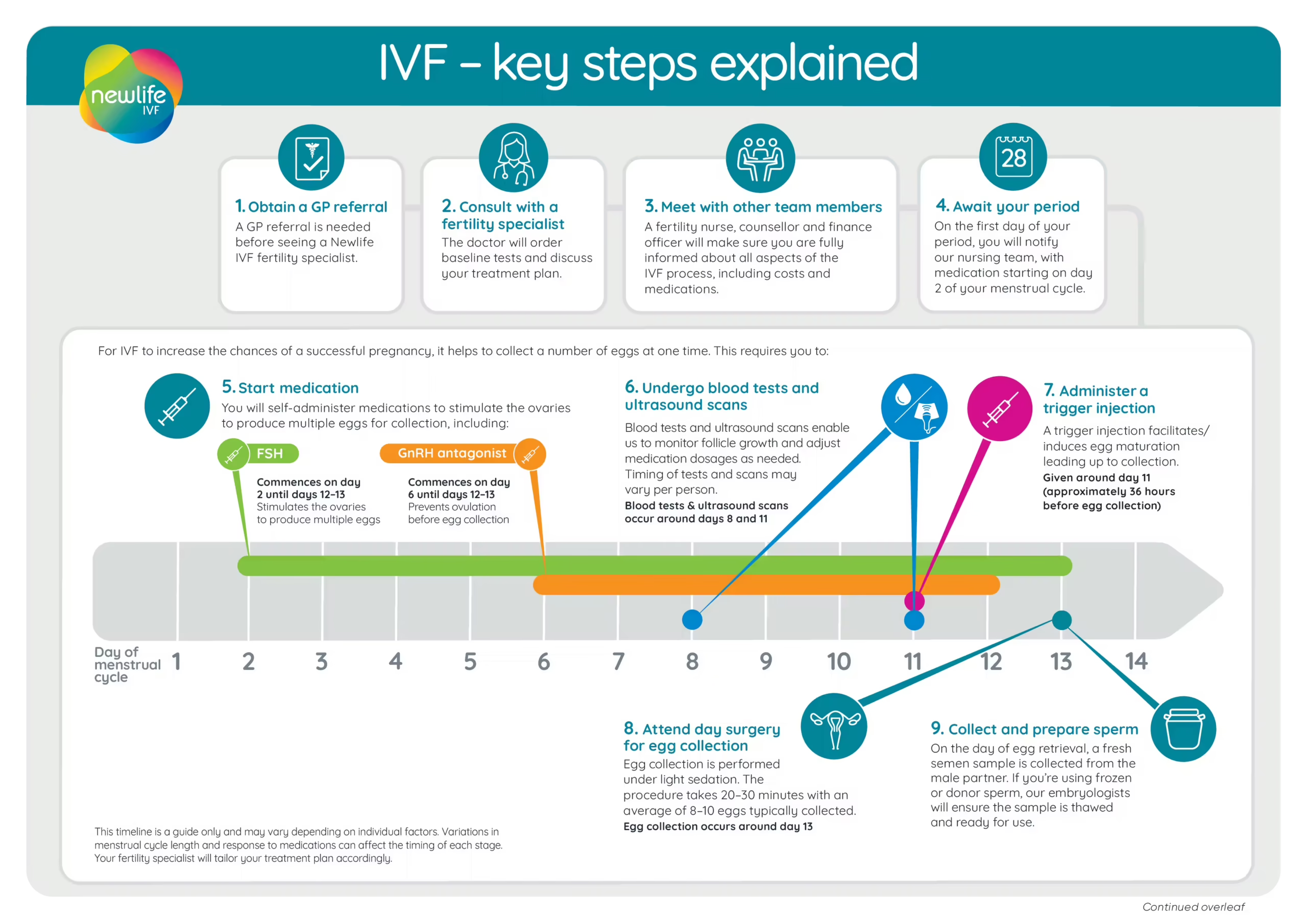
Step 1 – obtain a GP referral
You need a referral from your GP before seeing a fertility specialist to discuss egg freezing. This also allows you to access the Medicare rebate if you are eligible, e.g. where an underlying illness or medical treatment could impact your future fertility.
Step 2 – fertility specialist appointment
Your Newlife IVF fertility specialist will review your medical history, order any blood tests and ultrasounds required, and develop a personalised treatment plan based on your unique circumstances. Your specialist will also discuss with you the number of eggs they expect to be able to collect based on your age and other factors, the likely chance of pregnancy from using eggs frozen at your age, and whether multiple egg collection cycles might be beneficial for you.
Step 3 – additional appointments
You’ll have a session with one of our counsellors to ensure you feel informed and supported. We’ll arrange a finance meeting to provide a clear breakdown of all costs involved, and you’ll meet with one of our fertility nurses, who will guide you through the treatment process. Your nurse will tell you about the different medications involved in egg freezing, teach you how to self-inject the required hormonal medications at home, and let you know what to expect during the egg collection procedure at our day surgery.
Step 4 – preparing for treatment
Once your period begins (day 1), call the nursing team to inform them. On day 2, start your medication as directed to start stimulating your ovaries (see next step).
Step 5 – ovarian stimulation
In order to stimulate your ovaries to produce multiple eggs for collection, you will need to self-administer daily hormone injections over an 8–14 day period (we will show you how to do this safely and comfortably).
Step 6 – monitoring
Throughout the stimulation period, we will use ultrasound to monitor any developing follicles (which contain your eggs). This helps us determine the best time to collect your eggs.
Step 7 – egg collection
Once mature, we will collect your eggs while you are lightly sedated. Surgery takes 10–15 minutes and an average of 8–15 eggs are typically collected.
Step 8 – storage
From the eggs we collect, we will identify any mature eggs and freeze them. Your frozen eggs will be carefully stored in our quality-controlled facility until a time when you might choose to use them in the future (frozen eggs can be stored for up to ten years in Victoria).
What are the risks involved in egg freezing?
Egg freezing is considered a safe procedure. Though, like any medical intervention, it carries some small risks and side effects. These may include ovarian hyperstimulation syndrome (OHSS) as a response to stimulation medications, discomfort during egg retrieval and, in rare cases, complications such as bleeding or infection. Serious complications are uncommon.
Consulting with a fertility specialist can help you decide if egg freezing is the right option for you, along with understanding the process, risks and potential outcomes.
How many eggs do I freeze?
Our fertility specialists aim to collect the highest number of mature eggs that can be obtained safely. The ideal number varies depending on your age, ovarian reserve and your future family planning goals. Often more than one cycle of egg freezing is needed to collect enough eggs to give a good chance of a baby in the future.
While egg freezing can help preserve your younger eggs, it does not guarantee a future pregnancy or baby. Between egg collection and a successful birth, several important stages still need to occur. For example, after thawing, the eggs must be successfully fertilised using your partner’s or donor sperm to create embryos. Those embryos then need to continue developing appropriately before one is transferred to the uterus and successfully implants, ultimately leading to pregnancy and birth.
Therefore, having a higher number of frozen eggs can improve the likelihood of progressing through the stages required to achieve a future pregnancy.
How many eggs do most women get?
The number of eggs collected in one cycle varies widely. Some women collect fewer than 5 mature eggs in one cycle, while others collect 20 or more. This depends largely on age, ovarian reserve and how the ovaries respond to stimulation medication. Your fertility specialist can estimate how many eggs you may be able to obtain after assessing your ovarian reserve with a blood test and ultrasound scan.
What are the success rates for conceiving a baby using frozen eggs?
Egg freezing provides the potential for a future pregnancy, but success is not guaranteed. While over 98% of frozen eggs survive the thawing process, achieving pregnancy depends on several key IVF stages, including fertilisation, embryo development and implantation in the uterus – each with its own challenges.
The likelihood of a live birth from frozen eggs is further influenced by your age at the time of freezing and the number and quality of eggs collected. Age is the most reliable indicator of egg quality, with younger eggs generally having a higher chance of leading to a successful pregnancy. This is because the proportion of eggs with the correct number of chromosomes declines naturally with age, reducing the chance that each egg will result in a healthy pregnancy. For example:
If a woman freezes 20 eggs before the age of 35, studies show the estimated chance of having a baby from those eggs is around 80%. Freezing 40 eggs increases this likelihood to over 90%.
However, if a woman freezes 20 eggs at the age of 40, the estimated chance of having a baby from those eggs is less than 50%.
Therefore, if you are considering egg freezing, speaking with a fertility specialist earlier rather than later can help you explore your options. While each person’s fertility journey is unique, starting the conversation in your younger years typically provides more flexibility and choices for your future family planning. The natural biology of egg quality means that preserving eggs at a younger age may increase your chances of successful fertility treatment later on, should you choose that path.
The number of eggs collected in each cycle depends on a patient’s ovarian reserve and how their body responds to the medication. Because of this, egg freezing may require multiple treatment cycles to achieve an optimal number of eggs for future use.
Is it better to freeze eggs or embryos?
If you have a current partner and are considering your fertility preservation options, you may be wondering whether it is better to freeze eggs or embryos. Both are effective options, and the right choice depends on your personal circumstances, future plans and preferences.
Egg freezing preserves your eggs in an unfertilised state. This gives you the flexibility to decide in the future who you may have children with and avoids the legal and emotional complexities that can arise if your current relationship changes over time. You retain sole control over decisions regarding the future use of your frozen eggs.
Embryo freezing involves fertilising the eggs with sperm and allowing the resulting embryos to develop before freezing them. This can provide more information about the egg quality and may provide a clearer indication of your chances of a baby. For example, embryos can be graded to assess their development, giving you a clearer indication of how many viable embryos may be available for future IVF treatment. If appropriate, embryos can also undergo preimplantation genetic testing (PGT) tto screen for chromosomal abnormalities. Eggs alone cannot undergo these forms of assessment. However, in Australia, embryos created with a partner generally require the consent of both people before they can be used. If the relationship changes or ends, this sometimes prevents the future use of the frozen embryos.
It is important to discuss both options with your fertility specialist to determine the best path for you.
What does egg freezing cost?
Newlife IVF is committed to offering reasonable pricing, reflecting our belief that egg freezing should be accessible to all. While elective (non-medical) egg freezing isn’t covered by Medicare, egg freezing for medical reasons is. You can visit our fees page for a general overview of the costs involved. We recommend booking an appointment with one of our fertility specialists in Melbourne for personalised advice and a clearer understanding of the costs based on your specific circumstances.
Your timeline, your choice
Life doesn’t wait for anyone – but you can make your eggs wait for you. Be fertility ready when you’re ready.
If you need help deciding whether egg freezing is right for you, contact us to talk about your options.
 [/one_half_last]