Today, that vision, combined with the collective expertise and experience of our fertility specialists and support staff, has earned Newlife IVF recognition as one of Victoria’s top-performing IVF clinics.
According to the latest figures reported by the Herald Sun (sourced from the Federal Government’s Your IVF Success website), Newlife IVF holds the highest IVF success rate in Victoria for women under 35, with an impressive 62.5% of embryo transfers resulting in live birth.
For women aged 35 to 42, Newlife IVF also leads with the highest birth rates per embryo transfer in Metropolitan Melbourne (31.7%), placing us third overall in Victoria for this age group.
‘We are delighted to share that we have had another great year for our patients, with our pregnancy and birth success rates consistently above the national average. Our fertility specialist team focuses on providing the best possible milieu for eggs to mature and embryos to implant, and our amazing embryologists focus on every aspect of the egg, sperm and embryo care to provide a nurturing environment to achieve their developmental potential,’ said Dr Nicole Hope, fertility specialist and Medical Director at Newlife IVF.
A vision for exceptional fertility care
As a clinician-owned and led fertility clinic, we’re proud to be one of the few independent specialist fertility centres in Victoria. This independence allows us to offer a more personalised, supportive experience than corporate-owned clinics.
‘We feel so privileged to play a part in our patients’ journeys. Being able to provide a level of care that helps them achieve their dream of starting a family is truly an honour for us,’ said Dr Tiki Osianlis, Newlife IVF’s Managing Director and Scientific Director.
Every aspect of our practice is designed with our patients’ needs in mind. From our state-of-the-art laboratory to our use of advanced scientific tools and techniques, we combine expert-led care with cutting-edge science to give our patients the best possible chance of building the family they dream of.
‘Our IVF success rates highlight how effective our approach is. It’s not just about the science – it’s about the people. The entire team, from our fertility specialists and nurses to our embryologists, counsellors and admin staff, take the time to truly understand each patient’s unique journey. We adapt our care to fit their needs, and every single one of us is genuinely invested in helping our patients achieve their dream of becoming parents,’ said Dr Tiki.
Giving you Newlife in a different way
At Newlife IVF, we believe that everyone deserves the opportunity to build their family, which is why we’re committed to making quality fertility treatment in Melbourne as accessible as possible. We remain committed to delivering outstanding results and compassionate care, empowering our patients with the best possible chance of success.
If you’re ready to explore your options for having a baby, you can make an appointment with one of our specialists by calling (03) 8080 8933 or by booking online.
IVF is an assisted reproductive technique that helps people overcome fertility challenges to start or grow their families. This process involves fertilising an egg with sperm in a specialised laboratory, with the resulting embryo carefully transferred into the uterus with the aim that it will lead to a pregnancy.
Whether you’re just beginning your fertility journey or considering your options, understanding the IVF process is an empowering first step. In this article, we’ll guide you through the process that we use at our fertility clinic in Melbourne, to help you make informed decisions about your next steps.
A step-by-step guide to the IVF process at Newlife IVF in Melbourne
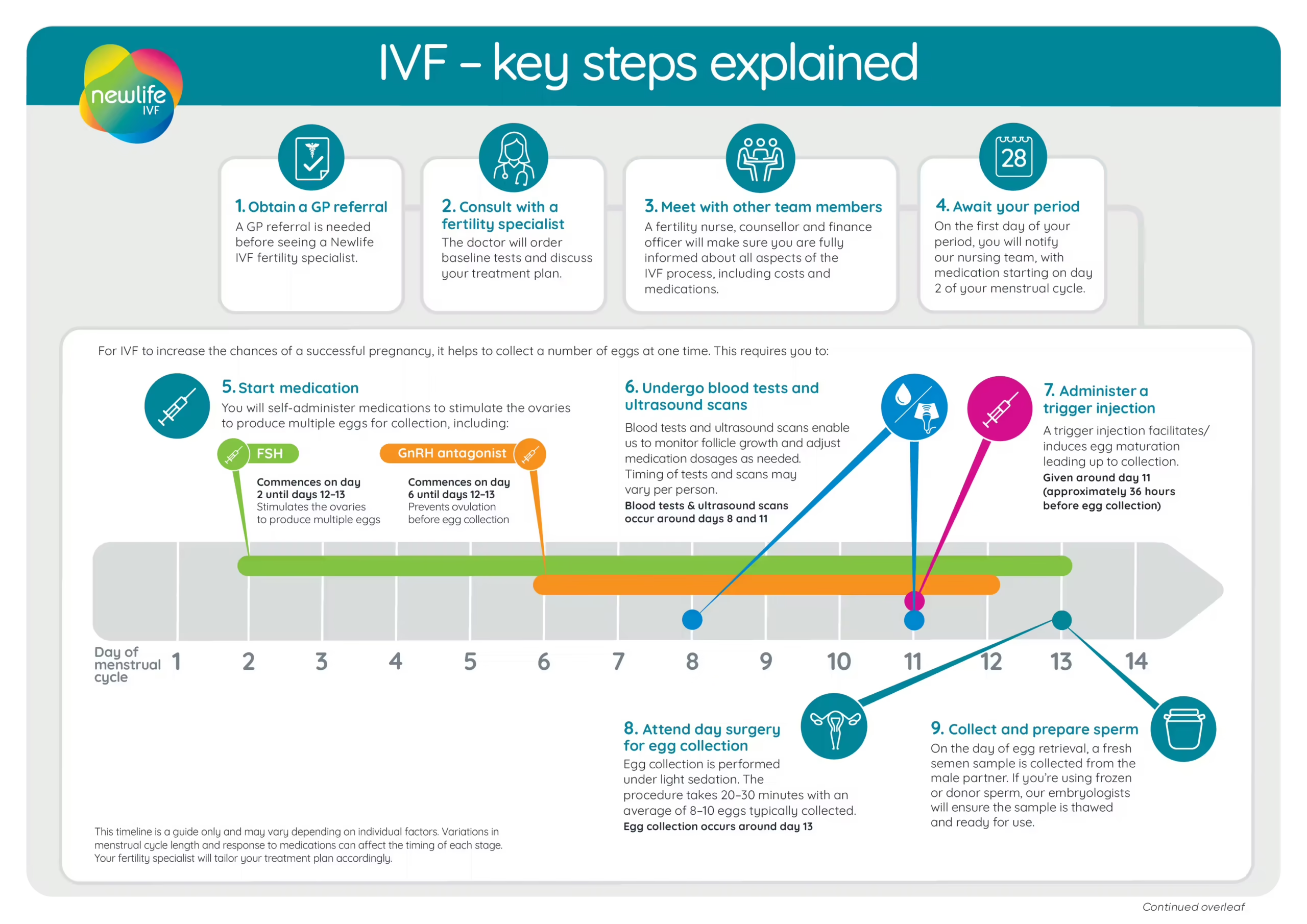
From the initial consultation through to the embryo transfer procedure, IVF involves a series of carefully coordinated stages – tailored to your unique needs – that are designed to give you the best chance of pregnancy success.
Step 1 – initial consultation with our Melbourne-based fertility specialist
If you’re concerned about your fertility and would like to seek advice from a fertility specialist, you will need a referral from your GP to attend our IVF clinic.
During your initial consultation, your fertility specialist will assess your health and the factors contributing to your fertility issues, as well as provide tailored advice, including recommendations about diet and lifestyle. This process involves taking a thorough medical history from you, performing relevant examinations and ordering appropriate tests. Your fertility specialist will also discuss all available treatment options with you so you can make an informed decision about whether the IVF process is right for you.
If it is decided that IVF treatment is appropriate, we will register you as a patient at our fertility clinic. At this stage, mandatory tests, such as screening for infectious diseases, will be conducted if they have not been done previously.
As no two fertility journeys are the same, fertility care at our IVF clinic in Melbourne is never one-size-fits-all. Our approach begins with uncovering the root causes of your fertility challenges and guiding you through the treatment options that best suit your unique circumstances. These options can range from straightforward solutions like fertility optimisation and ovulation induction to advanced treatments, such as intrauterine insemination (IUI), IVF, or IVF with intracytoplasmic sperm injection (ICSI).
In some cases, and after a careful review of your medical and IVF history, your fertility specialist may prescribe adjuvant treatments to complement an IVF cycle.
Step 3 – ovulation induction and hormone stimulation
Ovulation induction is a commonly used fertility treatment for individuals with ovulatory dysfunction. Often serving as an early intervention, it can be effective as a standalone treatment or combined with others, such as IUI or IVF, to improve the chances of conception. Ovulation induction involves using fertility medication to stimulate your ovaries to produce one or more mature eggs and assist with ovulation. For those undergoing IVF, hormone stimulation with fertility medications is used to stimulate your ovaries to produce a higher number of mature eggs than they normally would. This is a critical step in preparation for egg retrieval.
During this stimulation phase, self-administered hormonal injections are given over 8–14 days to encourage the development of multiple eggs, increasing the number available for retrieval and fertilisation.
Step 4 – fertility blood tests and monitoring
Careful monitoring plays a vital role throughout the stimulation phase. Using a combination of blood tests and ultrasounds, your fertility specialist will closely track how your ovaries are responding and how the follicles (sacs in the ovaries that contain eggs) are developing. These tests allow your specialist to assess if everything is progressing as planned and fine-tune your fertility medication to optimise your results.
As you near the end of the stimulation phase, monitoring is used to determine the optimal time for the ‘trigger injection’, which prepares the eggs for ovulation (i.e. their release from the ovaries). Your fertility nurse will liaise with your fertility specialist and guide you on when to administer the injection, as precise timing is essential – the egg retrieval procedure must occur before natural ovulation. Monitoring usually takes place at one of our Newlife IVF locations in Melbourne. However, you don’t have to be in Melbourne to access treatment. We have patients that live in rural or interstate locations and we work with local pathology and ultrasound providers to assist with our patients’ monitoring needs.
Step 5 – egg retrieval procedure at our IVF clinic in Melbourne
Egg retrieval, also known as egg collection or egg pickup, is a key step in the IVF process. This procedure involves collecting eggs from your ovaries, which can be frozen for future use or fertilised in the next stage of your IVF cycle.
Performed at our IVF clinic under sedation, egg retrieval is a straightforward procedure that typically takes 20–30 minutes. During this time, your fertility specialist carefully collects eggs from your ovaries using a fine needle guided by ultrasound imaging. On average, 8–12 eggs are retrieved, although the exact number depends on factors such as age, ovarian response to the medication and health history.
Collecting multiple eggs at once is important to IVF success. A higher number of eggs increases the chance of developing the healthy embryos needed for a successful embryo transfer and pregnancy.
Our team understands that undergoing egg retrieval can feel both exciting and a little nerve-wracking. But you can rest assured that we’re here to support you every step of the way so that you feel informed and comfortable throughout the entire IVF process.
Step 6 – sperm collection and ICSI treatment
On the day of egg retrieval, fresh semen samples are collected from the male partner. If you’re using frozen or donor sperm, our embryologists will ensure the sample is thawed and ready for use.
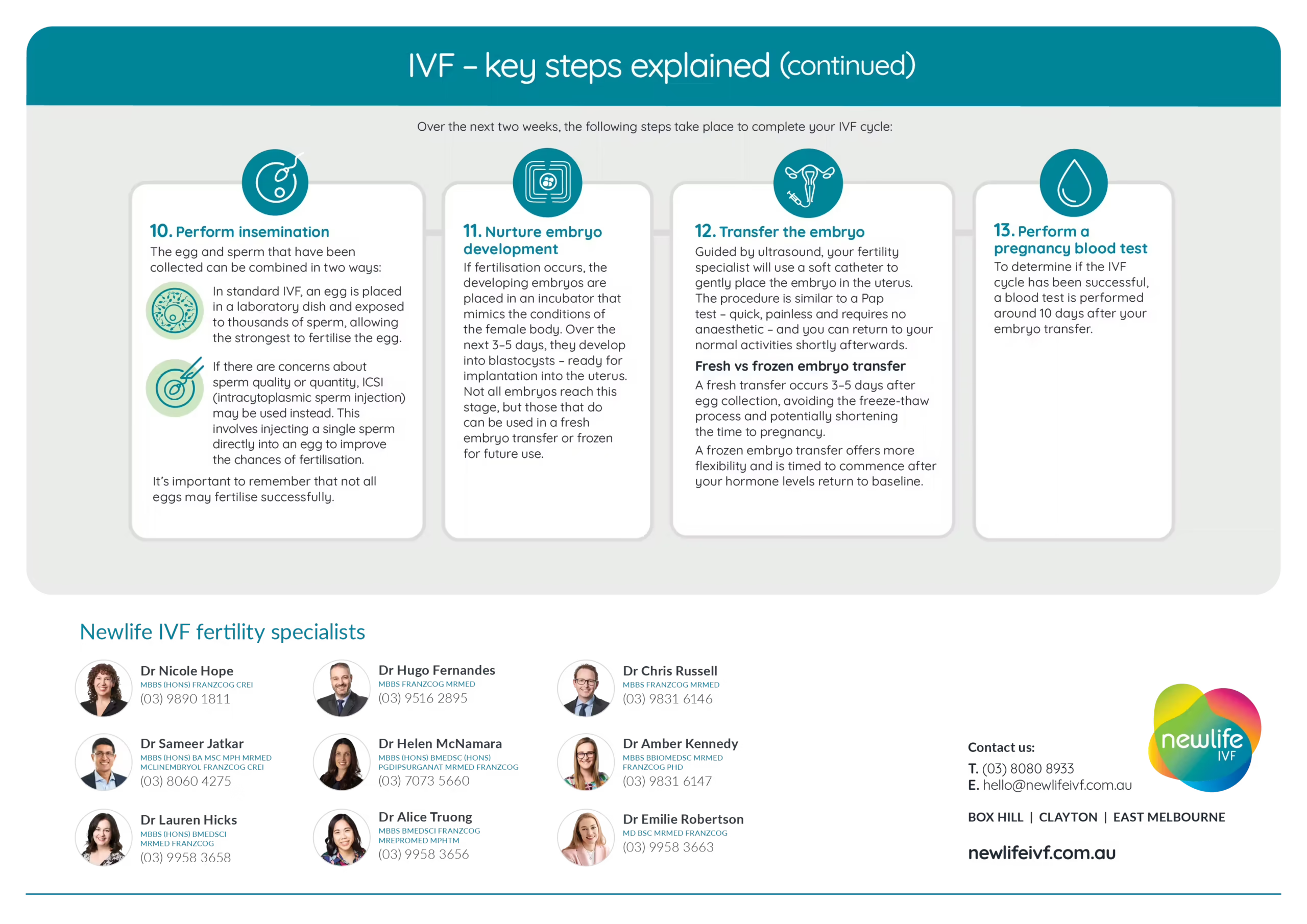
For standard IVF, the semen sample is carefully prepared by removing the seminal fluid (the fluid that contains sperm), isolating the motile sperm and removing immotile sperm before the insemination procedure
For ICSI, the process is more precise. Only a single sperm is used for fertilisation, requiring experienced embryologists to select the healthiest and most viable sperm and inject it directly into the egg.
Selecting the ideal sperm is a delicate process requiring years of expertise. Our embryologists are trained to identify sperm with the best shape and structure to maximise the chances of successful fertilisation.
Step 7 – fertilisation and embryo development
The next step in the IVF process is fertilisation, where egg and sperm are brought together.
In some cases, depending on the sperm quality and the patient’s previous history, we use standard insemination, where each egg is placed in a laboratory dish and exposed to thousands of prepared sperm. The fittest sperm may then fertilise the egg naturally, mirroring what would occur in the body.
However, if there are challenges such as low sperm count or abnormalities in sperm quality, an advanced technique called ICSI may be used. With ICSI treatment, a single, healthy-looking sperm is carefully injected into an egg to increase the chances of fertilisation. While this method offers additional precision, it’s important to note that not all eggs will successfully fertilise.
If fertilisation occurs, the resulting embryos are carefully placed in an incubator that mimics the conditions of the female body. Over the next five days, these embryos grow and divide, preparing for the next stage of the IVF process – embryo transfer.
Step 8 – the embryo transfer procedure
The embryo transfer is one of the quickest yet most important stages of the IVF process. During this procedure, a carefully selected embryo is placed into your uterus with the hope that it will successfully implant and lead to pregnancy.
Performed under ultrasound guidance, the transfer involves using a long, thin instrument to gently release the embryo through the vagina and cervix into the uterus. For most women, the procedure feels similar to a routine pap test. It is quick, requires no anaesthetic and allows you to resume your usual activities afterwards.
At Newlife IVF, our fertility specialists and embryologists are committed to providing the highest standard of care and technology to maximise your chances of IVF success.
Step 9 – pregnancy testing and ongoing support
The pregnancy test represents the culmination of weeks of preparation. This fertility blood test measures the level of human chorionic gonadotrophin (hCG) in your body – a hormone produced when a fertilised egg (an embryo) implants into the uterus. Elevated hCG levels can indicate a successful IVF cycle and the achievement of pregnancy.
This test is performed approximately eleven days after the embryo transfer, giving your body the necessary time to respond to implantation. While waiting for results can be an emotional experience, our dedicated team is here to support you regardless of the outcome.
This webinar, presented by fertility specialists Dr Chris Russell and Dr Nicole Hope, provides a more detailed explanation of the IVF process.
What influences IVF success?
Several factors can affect the chances of achieving a healthy pregnancy. Some of the most significant include:
Age at egg retrieval
Sperm quality
Cause of infertility or underlying medical conditions
Body mass index (BMI)
Lifestyle factors, including smoking, recreational drug use and alcohol consumption
Medications use.
Because infertility is incredibly nuanced, we encourage you to speak with your fertility specialist about your specific circumstances.
Why choose Newlife IVF?
At Newlife IVF, we understand how significant the IVF process is, and we’re committed to walking beside you on your journey to parenthood. Whether celebrating your success or exploring the next steps, you’ll always have compassionate care and expert guidance from our team.
Clinician-owned and led fertility clinic in Melbourne
As one of few independent specialist fertility centres in Victoria, we take pride in offering a more personalised, compassionate and supportive experience compared to corporate-owned clinics.
State-of-the-art IVF treatment in Melbourne
Every aspect of our practice is thoughtfully designed with your needs in mind, from our expert-led care to our state-of-the-art laboratory and scientific tools and techniques.
Advanced scientific techniques and high IVF success rates
We incorporate cutting-edge scientific advancements into every step of our IVF treatment process, helping to give you the best possible chance of achieving a successful pregnancy.
Our approach includes the use of the EmbryoScope time-lapse system, which provides continuous monitoring of embryo development, sequential media to nurture embryos, and EmbryoGlue to enhance implantation potential when transferring embryos into the uterus.
For ICSI treatment, we take it a step further with egg spindle visualisation technology, allowing us to carefully select eggs with the greatest potential for fertilisation.
Our IVF success rates reflect the effectiveness of these methods, consistently exceeding the national average and giving our patients a better chance of achieving their dream of parenthood.
Accessible and affordable IVF treatment in Melbourne
At Newlife IVF, we believe that everyone deserves the opportunity to build their family, which is why we are committed to providing affordable IVF treatment. Our fee structure is designed to be transparent and accessible, ensuring that fertility care in Melbourne, including IVF, is reasonably priced and doesn’t involve the stress of unexpected costs.
Contact Newlife IVF – your trusted fertility clinic in Melbourne
Fertility is largely influenced by the quality of both eggs and sperm. Age is the biggest determinant of egg quality1, but other factors such as diet, weight, physical activity and exposure to toxins (including illicit drugs or medications) also play a role. The good news is that whilst you cannot modify your age, there are things that you can do to improve egg quality and your chances of getting pregnant.
This involves making changes (if needed) to areas of your life that can influence various biological processes in the body – fertility included. With the proper modifications, you can protect your eggs from the harm caused by these factors and increase your likelihood of conceiving.
Why is age such a big factor?
Fertility starts to decline at the beginning of a woman’s 30s, but the decline is more rapid after age 35.1 This is because women are born with a lifetime supply of eggs – around 1-2 million – and this reserve gradually decreases over time. Egg quality also declines with age as the DNA in eggs becomes more susceptible to damage.
Eggs of lower quality are less likely to fertilise and develop into an embryo, affecting the chances of pregnancy. Additionally, older eggs are more likely to be affected by chromosome imbalance, which is associated with difficulty falling pregnant, an increased risk of miscarriage and a higher incidence of children born with a chromosome disorder (e.g. Down Syndrome).2
Unfortunately, once an egg’s DNA is damaged or the egg has an incorrect number of chromosomes (we call this aneuploidy), it cannot be reversed or repaired. For this reason, it’s important to protect your egg quality as much as possible.
Tips to improve your egg quality
Smoking
Women who smoke or are exposed to second-hand smoke often face delays in conceiving. Smoking damages egg DNA, which reduces fertility and increases miscarriage risk.3 It also increases the chance of ectopic pregnancy and makes embryo implantation harder, while increasing the risk of pregnancy complications.4 Therefore, avoiding smoking and second-hand smoke is crucial when trying to conceive and during pregnancy.
Additionally, researchers are still learning about all the risks of e-cigarettes (vapes) on conception and pregnancy. At this stage, no amount of vaping is considered safe when trying to conceive.
Alcohol
If you’re trying to conceive, drinking alcohol can affect your ability to get pregnant and stay pregnant. Some studies suggest that even low to moderate alcohol consumption is associated with reduced fertility.5 Drinking alcohol can alter hormone levels and disrupt the menstrual cycle and the ability to ovulate, therefore reducing the chances of conceiving. So, cutting down or cutting out alcohol can improve your chances of falling pregnant, along with helping you embrace a healthier lifestyle.
Coffee/caffeine
Some studies have shown reduced fertility and increased risk of miscarriage with excessive caffeine consumption.6 Most studies also indicate that the risk of infertility rises with higher levels of caffeine intake. Unfortunately, a safe daily amount of caffeine has not been established. For this reason, we recommend limiting your intake to one caffeinated drink per day (<80–100 mg of caffeine). If you can go without all together, even better!
Illicit drugs
Taking recreational drugs reduces the chances of becoming pregnant and having a healthy baby. For instance, cannabis and opioids are known to disrupt normal hormone production, leading to problems with ovulation and menstrual cycle disturbances.7 Additionally, stimulants such as cocaine and crystal meth have been linked to higher rates of miscarriage.8 Therefore, avoiding illicit drug use is one of the simplest ways to preserve your fertility.
Extreme exercise
Over-exercising can hinder ovulation and hormone production – specifically progesterone production, which is critical in supporting a pregnancy as it helps to thicken the lining of the uterus (needed for embryo implantation). Excessive exercise has also been linked to miscarriage.9 Vigorous exercise should not exceed 4 hours a week. However, lighter activities, such as walking and Pilates, are not limited.
Diet
The Mediterranean diet is often recommended for individuals undergoing in vitro fertilization (IVF) due to its potential benefits for reproductive health – and this may include egg quality. This diet emphasises the consumption of whole foods, including fruits, vegetables, whole grains, legumes, nuts, fish and healthy fats like olive oil, while limiting processed foods, red meat and added sugars.
Research suggests that adherence to the Mediterranean diet may improve fertility outcomes by promoting a healthy weight, reducing inflammation and optimising insulin sensitivity, all of which can positively influence ovarian function and embryo quality.10,11
Maintaining a healthy weight
Being underweight or overweight is associated with reduced pregnancy rates. This is because carrying too little or too much weight can disrupt the balance of hormones in your body, leading to ovulatory issues and irregular periods, along with an increased risk of miscarriage. Even if a woman has a regular cycle, fertility may still be reduced compared to women within the healthy weight range (a body mass index between 18.5 and 25).
Weight loss in overweight people doesn’t have to be drastic to improve fertility. Research has shown that even a modest drop in body weight (5–10%) can increase the chances of pregnancy – not to mention many other health benefits, such as a reduced risk of conditions like diabetes and heart disease, and a lower rate of pregnancy-related complications.12 Weight training and improving your lean body mass is also crucial for optimising your metabolism and reducing insulin resistance.
Weight loss is difficult, but your care providers can help you navigate the weight management journey. Talking to your GP or fertility specialist about weight is a great first step. We’ll make sure you have the support you need.
Medical conditions and medications
Conception is most likely to occur when you’re in good health. Untreated medical conditions, especially hormonal disorders (e.g. thyroid issues) and gynaecological conditions (e.g. endometriosis), can hinder fertility. It’s essential to manage these conditions before trying to conceive. Additionally, ensure that any prescribed medications are safe to take during conception and pregnancy by discussing these with your fertility specialist.
Night shift work
Night shift workers may experience reduced fertility because disrupted or insufficient sleep can interfere with the body’s circadian rhythm, leading to hormonal imbalances. Research on patients undergoing IVF has shown that women working night shifts tend to produce fewer eggs suitable for embryo development.13 Meanwhile, other studies have linked shift work to higher miscarriage rates.14 If possible, avoid night shift work and stick to a regular shift schedule rather than rotating between day and night shifts, as consistency can help reduce the impact on hormone levels.
Supplements for improving egg quality
In addition to lifestyle changes, certain supplements are often recommended. While evidence supporting their impact on egg quality and IVF success rates is limited, some studies suggest potential benefits, whereas others show no significant improvements in fertility outcomes. However, when taken at recommended doses, these supplements are generally considered safe.11
For instance, antioxidants like vitamin E and coenzyme Q10 may enhance IVF outcomes by reducing DNA damage and improving egg quality, particularly in older women or those with diminished ovarian reserve. Other commonly suggested supplements include vitamin D (especially for those with a deficiency) and omega-3 fatty acids.11
Additionally, all women trying to conceive should take a supplement containing at least 400 mcg of folic acid, which is crucial for DNA synthesis and reducing neural tube defects, along with 150 mcg of iodine to support thyroid function.11
Small changes can lead to big results
Simple yet impactful lifestyle changes go a long way towards preserving egg quality, preventing egg damage and improving your overall fertility. By addressing these modifiable factors and prioritising your overall wellbeing, you can boost your chances of conception and a healthy pregnancy.
If you’re ready to explore your options for having a baby or are concerned about your fertility, you can make an appointment with one of our specialists by calling (03) 8080 8933 or by booking online.
References
Better Health Channel. Age and fertility [internet]. Victoria (AU): Better Health Channel; 2023 [updated 2023; cited 2024 Oct]. Available from: https://www.betterhealth.vic.gov.au/health/conditionsandtreatments/age-and-fertility ↩↩
Winship A, Stringer J, Liew S et al. The importance of DNA repair for maintaining oocyte quality in response to anti-cancer treatments, environmental toxins and maternal ageing. Hum Reprod Update. 2018;24(2): 19–134. doi: https://doi.org/10.1093/humupd/dmy002. ↩
Pineles BL, Park E, Samet JM. Systematic review and meta-analysis of miscarriage and maternal exposure to tobacco smoke during pregnancy. Am J Epidemiol. 2014;179(7):807–23. doi: 10.1093/aje/kwt334. Epub 2014 Feb 10. PMID: 24518810; PMCID: PMC3969532. ↩
Better Health Channel. Pregnancy and smoking [internet]. Victoria (AU): Better Health Channel; 2022 [updated 2022; cited 2024 Oct]. Available from: https://www.betterhealth.vic.gov.au/health/healthyliving/pregnancy-and-smoking ↩
Fan D, Liu L, Xia Q et al. Female alcohol consumption and fecundability: a systematic review and dose-response meta-analysis. Sci Rep. 2017;7(1):13815. doi: https://doi.org/10.1038/s41598-017-14261-8 ↩
Lyngsø J, Ramlau-Hansen CH, Bay B et al. Association between coffee or caffeine consumption and fecundity and fertility: a systematic review and dose-response meta-analysis. Clin Epidemiol. 2017;9:699–719. doi: 10.2147/CLEP.S146496. PMID: 29276412; PMCID: PMC5733907. ↩
The Society of Obstetricians and Gynaecologists of Canada. Substance use and fertility [internet]. Ontario (CA): The Society of Obstetricians and Gynaecologists of Canada; 2024 [cited 2024 Oct]. Available from: https://www.pregnancyinfo.ca/before-you-conceive/fertility/substance-use-and-fertility/ ↩
Smid MC, Metz TD, Gordon AJ. Stimulant use in Pregnancy: An Under-recognized Epidemic Among Pregnant Women. Clin Obstet Gynecol. 2019;62(1):168–184. doi: 10.1097/GRF.0000000000000418. PMID: 30601144; PMCID: PMC6438363. ↩
Barakat R, Zhang D, Silva-José C et al. The influence of physical activity during pregnancy on miscarriage-systematic review and meta-analysis. J Clin Med. 2023;12(16):5393. doi: 10.3390/jcm12165393. PMID: 37629435; PMCID: PMC10455409. ↩
Hart RJ. Nutritional supplements and IVF: an evidence-based approach. Reprod Biomed Online. 2024;48(3):103770. doi: 10.1016/j.rbmo.2023.103770. ↩
Yang J, Song Y, Gaskins AJ, et al. Mediterranean diet and female reproductive health over lifespan: a systematic review and meta-analysis. Am J Obstet Gynecol. 2023;229(6):617-631. doi: 10.1016/j.ajog.2023.05.030. ↩↩↩↩
Haase CL, Varbo A, Laursen PN et al. Association between body mass index, weight loss and the chance of pregnancy in women with polycystic ovary syndrome and overweight or obesity: a retrospective cohort study in the UK. Hum Reprod. 2023;38(3):471–481. doi: https://doi.org/10.1093/humrep/deac267 ↩
Liu Z, Zheng Y, Wang B et al. The impact of sleep on in-vitro fertilization embryo transfer outcomes: a prospective study. Fertil Steril. 2023;119(1):47–55. doi: 10.1016/j.fertnstert.2022.10.015 ↩
Mínguez-Alarcón L, Souter I, Williams PL, et al. Occupational factors and markers of ovarian reserve and response among women at a fertility centre. Occup Environ Med. 2017;74:426-431. doi: 10.1136/oemed-2016-103953 ↩