Embryo grading explained – what do those numbers and letters really mean?

Here, we break down what embryo grading really represents, how it is used in IVF laboratories, and what it means – and does not mean – for your chances of success.

What is embryo grading?

Embryo grading is a system embryologists use to describe the appearance of an embryo under the microscope at a specific moment in time. It allows us to make informed decisions about which embryos to transfer or freeze, and to communicate clearly within the laboratory team when assessing embryo development.

Importantly, embryo grading is a descriptive tool rather than a guarantee of outcome. IVF laboratories may use slightly different grading systems, which means embryo grades can vary between clinics – even clinics located within the same state – and are not always directly comparable. Understanding what grading does and does not tell us can help you feel more informed and reassured throughout your IVF journey.

Why is so much attention given to embryo grading?

It’s natural to want something tangible to hold onto during IVF, and embryo grades can feel like a clear point of reference. Much like our early educational experiences, receiving a ‘grade’ can feel like an assessment of performance. Many people assume that a higher grade means a better embryo (and therefore a higher chance of success), while a lower grade suggests the opposite.

While this interpretation is understandable, it isn’t entirely accurate. There are many factors involved in embryo development and implantation, and grading alone cannot capture them all.

Embryo grading is not a prediction tool; it is an observation tool. It tells us what an embryo looks like at a particular point in time, not whether it will implant or result in a pregnancy. Every viable embryo, regardless of grade, has the potential to result in a pregnancy.

In our many years of experience in IVF laboratories, we have seen high-grade embryos that did not implant, and lower-grade embryos that went on to become healthy babies. While grading helps us prioritise embryos for transfer or freezing at that moment, it is only one piece of a much larger picture.

When do we grade embryos?

Embryos are grown in the Newlife IVF laboratory for up to six days after fertilisation. By day five or six, embryos ideally reach the blastocyst stage, which marks a critical milestone in development.

At this stage, the embryo has developed into many interacting cells, and for the first time, we can clearly identify three distinct structures:

  • Inner cell mass (ICM): A cluster of cells inside the embryo that will eventually form the baby
  • Trophectoderm (TE): The outer layer of cells that will develop into the placenta, which supports the baby during pregnancy
  • Blastocoel: A fluid-filled cavity that allows the embryo to expand.
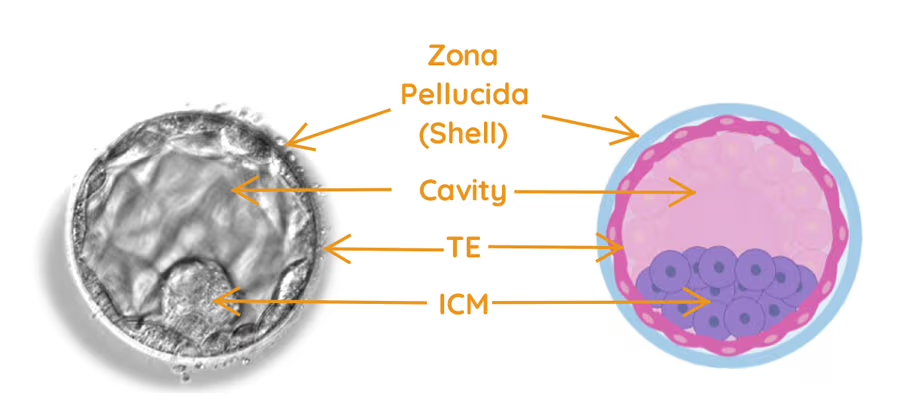
A photographic image of a blastocyst (left) positioned next to a graphic representation of a blastocyst (right). The images show the types of cells that go on to become an embryo proper (foetus), including the zona pellucida (shell), cavity, trophectoderm cells (TE) and inner cell mass (ICM).

How does blastocyst grading work?

Blastocyst grading assesses three main features: the stage of expansion, the characteristics of the inner cell mass, and the characteristics of the trophectoderm. Each component is graded separately, as outlined below.

Expansion stage

The expansion stage refers to the size of the blastocyst and how far it has progressed in breaking free from its protective outer shell, known as the zona pellucida. As the blastocyst grows, it needs to thin and eventually break through this shell in a process called hatching.

Expansion is categorised into six stages:

  • Stage 1: Early blastocyst development, where a small fluid cavity is just beginning to form
  • Stage 2: Early expanding blastocyst, with a growing cavity but still relatively small within the shell
  • Stage 3: Expanded blastocyst, where the cavity is larger and the embryo occupies more space, but hatching has not yet begun
  • Stage 4: Fully expanded blastocyst, filling most of the shell, which has thinned significantly
  • Stage 5: Beginning to hatch, with part of the embryo emerging through the shell
  • Stage 6: Fully hatched, where the embryo has completely escaped the zona pellucida and is ready for implantation.

Inner cell mass (ICM) characteristics (A–D)

The inner cell mass is the group of cells that will go on to form the baby. It is graded from A to D based on appearance:

  • A: Many healthy cells that are tightly packed
  • B: Several cells with a slightly looser arrangement
  • C: Few cells that are scattered and less cohesive
  • D: Very few or degenerating cells (considered non-viable).

Trophectoderm characteristics (A–D)

The trophectoderm forms the placenta and is also graded from A to D:

  • A: Many cells are present, forming a strong and cohesive layer
  • B: A moderate number of cells with less uniformity
  • C: Few cells with an irregular appearance
  • D: Very few or degenerating cells (considered non-viable).

Putting it all together

When you see an embryo grade, it is simply a shorthand way of combining these three observations into a single description.

For example, a grade of 5AB means:

  • 5: The blastocyst is beginning to hatch from its outer shell
  • A: The inner cell mass has many tightly arranged cells
  • B: The trophectoderm has a reasonable number of cells forming a mostly cohesive layer (although the layer may not be uniform).

While this grading helps embryologists make informed decisions in the laboratory regarding embryo quality, it’s important to remember that no single grade can determine the outcome of an embryo.

Embryo grades are not fixed and can change over time

Embryo grading provides a snapshot in time. Embryos are dynamic and continue to grow, divide and change as they develop.

For example, an embryo graded early on day five as 2CB may look quite different later the same day, potentially developing into a 4BB embryo. This progression is entirely normal and reflects ongoing development in a viable embryo.

The same principle applies when an embryo is transferred, while others continue developing in the laboratory. An embryo transferred on day five may be graded 3BB, while its siblings reassessed later could receive a seemingly higher grade, like 5AA. This difference is often due simply to timing and additional hours of development – not because the transferred embryo was a poorer option.

At the time of transfer, the chosen embryo was assessed as the best option based on its developmental stage, appearance and timing. Because grading is so closely linked to when an embryo is observed, it is not a reliable way of comparing embryos with one another. Instead, grading is just one part of a broader decision-making process.

You can learn more about this approach in our blog, How we select embryos for transfer.

What grading can (and can’t) tell us

In general, higher embryo grades are associated with higher pregnancy rates, which is why grading remains a useful tool when deciding which embryos to transfer or freeze.

However, embryo grading is not an absolute predictor of outcome. A high-grade embryo does not guarantee a pregnancy, and a lower-grade embryo does not mean a pregnancy will not occur. In practice, we regularly see examples where a high-grade embryo, such as 6AA, does not implant, while a sibling embryo with a lower grade goes on to result in a healthy baby.

Once a pregnancy is established, the embryo’s grade is no longer relevant. It does not predict whether a pregnancy will continue, nor does it reflect the future health of the baby.

If an embryo has been transferred or frozen, it has been deemed viable and has potential. Every viable embryo, regardless of grade, has the capacity to become a baby. For patients with embryos of varying grades in storage, or those who have had a lower-grade embryo transferred, there is every reason to remain hopeful.

Looking beyond letters and numbers

Embryo grading is only one part of how we assess embryo development. In addition to visual grading, we use time-lapse imaging, key developmental milestones, embryologist expertise and AI-powered tools to observe how embryos grow and behave over time.

Together, these approaches provide a better understanding of embryo health and potential, helping us make the most informed decisions for your treatment.

Our guidance for patients

We encourage Newlife IVF patients to focus on the number of viable blastocysts rather than becoming fixated on letters and numbers. An embryo’s potential is far greater than its grade alone.

If an embryologist has transferred or frozen your embryo, the embryo has the capacity to continue developing, and this potential matters far more than a single snapshot assessment.

Interested to learn more about embryo grading or IVF?

If you would like to understand more about embryo grading or IVF treatment, be sure to listen to the embryo optimisation podcast episode. Our team at Newlife IVF is also here to support and guide you throughout your fertility journey – call us on (03) 8080 8933.

Is egg freezing right for you?

If you’d like to have a family one day, egg freezing offers a way to preserve some of your younger, healthier eggs by storing them for future use. This option can help protect your future fertility, giving you the freedom to plan pregnancy when the time feels right – without feeling rushed by your biological clock – while increasing your chances of conceiving if any challenges arise.

At Newlife IVF, we believe egg freezing should be an accessible and affordable option for all women, no matter their reasons for choosing this path.

Why do women freeze their eggs?

In some cases, egg freezing is about timing – the right time for you to have a baby may not be the right time in terms of your fertility. Whether you’re focusing on your career, furthering your education, travelling, waiting for the right partner or achieving financial stability, egg freezing offers flexibility for those who aren’t yet ready to commence trying to conceive. Freezing your eggs at a younger age, when they are more likely to be of higher quality, helps preserve your fertility by ‘pressing pause’ on the natural decline in egg quality that comes with ageing. This gives you the option to revisit your family-building goals when the timing feels right for you.

Egg freezing for medical reasons

Certain health conditions and medical treatments can affect fertility, making egg freezing a valuable option. For example, it may be recommended before treatments such as chemotherapy or radiotherapy to help preserve future reproductive options.

Additionally, women with reproductive health concerns, such as endometriosis or polycystic ovary syndrome (PCOS), may consider egg freezing as a proactive step in preserving their fertility. Endometriosis is a condition where tissue similar to the uterine lining grows outside the uterus, which can affect egg quality and reduce ovarian reserve. Similarly, PCOS, a hormonal disorder that disrupts ovulation, can lead to increased difficulties in conceiving. In these cases, freezing eggs may provide an option for future family planning, including the possibility of IVF if needed.

What is the best age to freeze your eggs?

Once you have made the decision to freeze your eggs, it’s best to get started as soon as possible – ideally in your late 20s or early 30s when you still have a reasonable number of good-quality eggs. The quantity and quality of eggs are the most important factors when going through fertility treatment.

Unfortunately, eggs collected from women over the age of 35 are not as successful when used in IVF cycles. Therefore, if you are over 35, we will typically try to collect a greater number of eggs which means that you may have to go through more egg freezing cycles. This increases the likelihood that one or more of the eggs we collect will be appropriate for IVF, should you need to go down this path in the future.

What does egg freezing involve?

This infographic outlines the various steps involved in egg freezing: obtaining a GP referral, consulting with a fertility specialist, meeting with other team members, awaiting your period before starting the medication, undergoing blood tests and scans, administering a trigger injection (to induce egg maturation), attending days surgery for egg collection, and freezing and storing eggs.

Step 1 – obtain a GP referral

You need a referral from your GP before seeing a fertility specialist to discuss egg freezing. This also allows you to access the Medicare rebate if you are eligible, e.g. where an underlying illness or medical treatment could impact your future fertility.

Step 2 – fertility specialist appointment

Your Newlife IVF fertility specialist will review your medical history, order any blood tests and ultrasounds required, and develop a personalised treatment plan based on your unique circumstances. Your specialist will also discuss with you the number of eggs they expect to be able to collect based on your age and other factors, the likely chance of pregnancy from using eggs frozen at your age, and whether multiple egg collection cycles might be beneficial for you.

Step 3 – additional appointments

You’ll have a session with one of our counsellors to ensure you feel informed and supported. We’ll arrange a finance meeting to provide a clear breakdown of all costs involved, and you’ll meet with one of our fertility nurses, who will guide you through the treatment process. Your nurse will tell you about the different medications involved in egg freezing, teach you how to self-inject the required hormonal medications at home, and let you know what to expect during the egg collection procedure at our day surgery.

Step 4 – preparing for treatment

Once your period begins (day 1), call the nursing team to inform them. On day 2, start your medication as directed to start stimulating your ovaries (see next step).

Step 5 – ovarian stimulation

In order to stimulate your ovaries to produce multiple eggs for collection, you will need to self-administer daily hormone injections over an 8–14 day period (we will show you how to do this safely and comfortably).

Step 6 – monitoring

Throughout the stimulation period, we will use ultrasound to monitor any developing follicles (which contain your eggs). This helps us determine the best time to collect your eggs.

Step 7 – egg collection

Once mature, we will collect your eggs while you are lightly sedated. Surgery takes 10–15 minutes and an average of 8–15 eggs are typically collected.

Step 8 – storage

From the eggs we collect, we will identify any mature eggs and freeze them. Your frozen eggs will be carefully stored in our quality-controlled facility until a time when you might choose to use them in the future (frozen eggs can be stored for up to ten years in Victoria).

What are the success rates for conceiving a baby using frozen eggs?

Egg freezing provides the potential for a future pregnancy, but success is not guaranteed. While over 98% of frozen eggs survive the thawing process, achieving pregnancy depends on several key IVF stages, including fertilisation, embryo development and implantation in the uterus – each with its own challenges.

The likelihood of a live birth from frozen eggs is further influenced by your age at the time of freezing and the number and quality of eggs collected. Age is the most reliable indicator of egg quality, with younger eggs generally having a higher chance of leading to a successful pregnancy. For example:

  • If a woman freezes 20 eggs before the age of 35, the estimated chance of having a baby from those eggs is around 80%
  • Freezing 40 eggs increases this likelihood to approximately 95%.

Therefore, if you are considering egg freezing, speaking with a fertility specialist earlier rather than later can help you explore your options. While each person’s fertility journey is unique, starting the conversation in your younger years typically provides more flexibility and choices for your future family planning. The natural biology of egg quality means that preserving eggs at a younger age may increase your chances of successful fertility treatment later on, should you choose that path.

The number of eggs collected in each cycle depends on a patient’s ovarian reserve and how their body responds to the medication. Because of this, egg freezing may require multiple treatment cycles to achieve an optimal number of eggs for future use.

What are the costs involved?

Newlife IVF is committed to offering reasonable pricing, reflecting our belief that egg freezing should be accessible to all. While elective (non-medical) egg freezing isn’t covered by Medicare, egg freezing for medical reasons is. You can visit our fees page for a general overview of the costs involved. We recommend booking an appointment with one of our fertility specialists in Melbourne for personalised advice and a clearer understanding of the costs based on your specific circumstances.

Your timeline, your choice

Life doesn’t wait for anyone – but you can make your eggs wait for you. Be fertility ready when you’re ready.

Talk to us about egg freezing.

How embryos develop – from egg retrieval to blastocyst

After retrieval, the egg and sperm are combined, and if fertilisation is successful, your embryo spends the first few days growing in the lab under the expert care of our team. This blog will help guide you through these early embryo development steps before transfer or freezing.

Factors affecting embryo development

Embryo development is a complex process that requires a combination of genetic, environmental and physiological factors to progress successfully. To achieve good embryo development, we require:

Healthy egg and sperm

The egg and sperm provide the genetic blueprint for development. Each embryo needs a complete set of 46 chromosomes – 23 from the egg and 23 from the sperm. Some embryos inherit incorrect genetic instructions that can impact embryo development and make it harder for them to divide and grow as expected.

Mitochondrial energy

Embryos need energy to divide and grow, which is provided by mitochondria (tiny energy-producing structures in cells). Poor mitochondrial function can slow or stop embryo development.
Efficient metabolic function:

An embryo’s metabolic function provides both energy and the building blocks needed for development. This includes the creation of protein and fats, and the removal of waste products that can be toxic to the embryo. Together, these provide what the embryo needs for growth, cell division and viability.

Timely cell division

Embryos should ideally divide at a regular pace (2-cell, 4-cell, 8-cell, etc.). Uneven and/or delayed division can mean the embryo is of suboptimal quality and may not develop as expected.

Embryonic genome activation

Around Day 3 (see diagram below), embryos start using their own DNA instead of relying on maternal DNA (genetic code from the egg). If this DNA transfer is inadequate, interrupted or missing, this can slow or stop the development of an embryo.

Stable conditions

Embryos need the right temperature, oxygen and pH balance to grow. These factors are carefully assessed and monitored continuously in the laboratory environment.

Difficulties or inaccuracies in any of these processes can affect the way an embryo grows and can impact whether an embryo will reach the blastocyst stage (where it has divided into many cells), making it suitable for transfer or freezing.

Safeguarding your embryos is our highest priority

We understand how important every embryo is to your journey. That’s why we use the most advanced technology and scientifically proven methods to create the ideal environment for embryo development. From carefully performing every procedure to closely monitoring each embryo’s progress, our highly trained embryologists work tirelessly to give each embryo the best possible chance to grow and thrive.

We maintain strict laboratory conditions, including precise temperature, humidity and air quality control to mimic the natural environment as closely as possible. Our team carefully observes each embryo’s development at every stage. Even though not all embryos will reach the blastocyst stage, please know that we do everything in our power to maximise their potential. Your dream of building a family is at the heart of everything we do, and we are committed to providing the best possible care every step of the way.

If you have any questions about embryo development or your fertility journey, please reach out to Newlife IVF. In the meantime, let’s walk through the different stages of embryo development to help you better understand the process.


What can I do differently to fall pregnant in 2026?

As we enter a new year, it’s important to remind ourselves not to panic and to remain proactive when trying to have a baby. Below we discuss some of the changes you can make to optimise your fertility and how a fertility specialist can assist you.

Things you can do to improve your chances

1. Lifestyle changes

How you live can have a big impact on your fertility, and making some changes to your lifestyle can increase your likelihood of conceiving. For instance, quitting smoking and avoiding the use of recreational drugs benefits the overall reproductive health of both men and women. Other lifestyle changes that we recommend making when trying to fall pregnant (particularly over the silly season) include:

  • Consuming caffeine in moderation (1–2 teas/coffees per day)
  • Enjoying a safe amount of alcohol (including at least two alcohol-free days per week)
  • Exercising regularly but not excessively (30­–40 minutes three times per week)
  • Maintaining a healthy weight/BMI (there is a lower success with IVF if BMI > 30).

Having a healthy and balanced diet is essential for both your general and reproductive health. Studies have shown that omega-3 fatty acids can improve fertility in women, while diets high in trans fats may reduce fertility. Diet also affects semen quality in male partners – for instance, men who consume fish, shellfish, poultry, wholegrain cereals and fruits and vegetables typically have a better semen analysis than those with diets high in sugar and processed meats and cereals. It’s also important to note that before enjoying your favourite meals, you should avoid reheating food in plastic containers. This reduces your exposure to oestrogenic material which can also affect fertility.

For men, it’s also worth being mindful of heat exposure, as high temperatures can affect sperm health. Try to avoid hot tubs, saunas, heated car seats and resting a laptop directly on your lap for extended periods. It’s also advisable to avoid carrying your mobile phone in your front pocket. Opting for loose-fitting underwear can help keep the testicular area cool and support healthy sperm production.

2. Supplements

Folic acid is the main essential supplement we recommend taking while you are trying to conceive. Although folic acid doesn’t directly affect your fertility, it is very important for lowering the risk of spina bifida in the baby. We also recommend taking a good-quality multi-vitamin when you’re trying to fall pregnant.

For male partners, fertility-boosting nutrients such as vitamins C, E and folic acid, as well as zinc and selenium, have been linked to improved sperm quality.

3. Stress and anxiety

It’s normal to feel overwhelmed or anxious and to experience lots of uncertainty when embarking on your fertility journey. Through its influence on hormones, persistently high stress levels may hinder your chances of becoming pregnant, as well as affect sperm production in men. Therefore, we recommend finding a stress management technique that works for you and your lifestyle, which may involve simply stopping and slowing down or calling someone you trust to share how you are feeling. Other ways that you can help lower your stress levels include:

  • Incorporating meditation or mindfulness exercises in your daily routine (e.g. with guided apps like Headspace, Smiling Mind, Calm)
  • Engaging in a relaxing activity (e.g. cooking, gardening, drawing)
  • Trying acupuncture, traditional medicine, naturopathy (seek those with specialist fertility backgrounds).

Online resources specific to fertility and IVF can also help you manage stress and anxiety. Some of these include:

  • Apps that provide guided relaxation and mindfulness (e.g. Mindful IVF, IVF relax)
  • Podcasts available on Spotify or other streaming services (e.g. IVF warrior playlist by Lisa Dickinson, Fertility meditations imagery and visualisations for IVF by Jackie Brown)

It’s also important to try not to engage in unhealthy coping mechanisms when feeling stressed, such as consuming alcohol or drugs and binge eating.

4. It’s all in the timing

Timing intercourse significantly increases your chances of successfully falling pregnant. Out of 100 fertile couples who conceived without timed intercourse, 50% fell pregnant within three months. On the other hand, 76% of similar couples who used a method for timed intercourse conceived within the first month of trying.

Women have a fertile window of about five days before until one day after ovulation. While sperm can survive 3–5 days in the uterus and tubes, an egg usually only survives for 12–24 hours in the tubes. This means that in order to have the highest chance of falling pregnant, intercourse should occur during the 2–3 days before ovulation. Cycle lengths vary from woman to woman, so finding the right time to have sex will be based on the individual. Hormone tests that measure LH (a hormone that rises and leads to ovulation) can be used to help work out the best time for intercourse. Other timing techniques include having intercourse when cervical mucus is slippery and clear, or when the basal body temperature of the female partner is lower (it usually rises after ovulation). There are also a number of smartphone apps available to help track your cycle so you can give yourself the best possible chance of conceiving.

Studies have found that pregnancy rates are slightly better in couples who have intercourse daily (37%) than those who have sex every second day (33%). However, couples should decide on the frequency based on their relationship and dynamics, as daily intercourse is also associated with higher stress levels. We normally advise couples to have sex second daily in the lead up to ovulation to boost their chances of falling pregnant.

5. Becoming fertility aware

Understanding your fertility better (such as when to time intercourse) will help you troubleshoot what may be going wrong.

When to seek assistance with pregnancy

Women under 35 years of age are advised to seek help following 12 months of unprotected and frequent intercourse. As fertility declines with age, women between 35 and 40 are advised to seek specialist opinion after 6 months of trying. Some women who may need to seek help despite trying for less than 6 months include:

  • Women over 40 years of age
  • Women with oligomenorrhoea/amenorrhoea (infrequent or no periods)
  • Women with a history of chemotherapy, radiation therapy or advanced endometriosis
  • Women with known or suspected uterine/tubal disease.

Male partners with a history of groin or testicular surgery, adult mumps, impotence or any other sexual dysfunction, chemotherapy and/or radiation or a history of subfertility with another partner, are also advised to seek specialist opinion as soon as possible.

Your fertility specialist may ask you to undergo some fertility testing in order to fully understand your fertility needs. Some of these tests are described below.

Male factor evaluation

Semen analysis is the primary test for male fertility. A typical semen analysis involves assessing semen volume, sperm concentration and count, sperm motility (movement) and sperm morphology (shape). If the semen analysis appears abnormal, a second semen analysis will be done six weeks later, followed by consultation with a fertility specialist.

Female factor evaluation

There are a number of different tests that can be used to investigate female fertility, including:

  • Basic blood tests to check thyroid function and usual pre-pregnancy screening for infectious diseases
  • Ovulation testing
  • Uterine examinations (pelvic ultrasound)
  • Ovarian reserve tests (AMH testing, ‘Egg-timer test’)
  • Laparoscopy and hysteroscopy (especially for women with symptoms of potential endometriosis).

Tubal flushing can also help determine the patency of the fallopian tubes and is sometimes used as a dedicated intervention to increase fertility.

What if all that still doesn’t work?

Couples who have been trying to conceive for a year commonly require assistance with some form of fertility treatment. There are a few different options available depending on your individual fertility needs.

Ovulation induction

Ovulation induction involves taking medications (tablets or injections) to stimulate the production of hormones that grow and release an egg from a woman’s ovary.

IUI (intrauterine insemination)

Intrauterine insemination involves placing a large number of concentrated sperm into the uterus. By doing so, this boosts the chances of sperm meeting an egg and resulting in fertilisation.

IVF (in vitro fertilisation)

In vitro fertilisation is a procedure that involves fertilising the egg with sperm outside of the woman’s uterus, prior to it being transferred back into the womb for the remainder of the pregnancy. There are two steps in an IVF cycle – egg retrieval and embryo transfer. Egg retrieval is performed in hospital under light anaesthetic and typically takes 15–20 minutes. Patients are usually home 90 minutes later and may require paracetamol for the 1–2 day recovery period. Embryo transfer is a short, five-minute procedure guided by ultrasound. Patients do not routinely require an anaesthetic and are able to go back to work afterwards.

IVF with ICSI (intracytoplasmic sperm injection)

Typically, standard insemination is used during the IVF process – the sperm meets the egg and fertilises it within a laboratory dish. However, intracytoplasmic sperm injection (ICSI) is usually recommended when there is suspected or confirmed poor fertilisation results with standard insemination. ICSI involves directly injecting a single sperm into the centre of an egg, bypassing the outer covering of the egg and making fertilisation a bit easier.

In a nutshell

Making your dream of having a baby a reality can take a little time and persistence. There are some things you can do to help improve your chances and some things we can do to help too. Remember, if you are trying to fall pregnant over the silly season, take your multivitamins and don’t party too hard!

To meet with one of our fertility specialists in Melbourne and learn more about how how to fall pregnant, or to discuss your fertility treatment options, call Newlife IVF on (03) 8080 8933 or book online via our appointments page.

The Art of ART – our campaign honouring the craft of IVF

IVF is often described in purely scientific terms. Yet behind every procedure is something profoundly human. For patients, the journey is deeply personal, complex and emotional. For embryologists, it is a discipline that demands not only technical mastery but care, intention and empathy. Every patient’s experience is unique – much like a work of art, shaped by its own story and meaning.

This campaign draws on that parallel. In art, skill and imagination come together to create something meaningful. In IVF, science and human insight unite to nurture the earliest stages of life.

Assisted reproductive technology depends on advanced tools and rigorous standards, but its true strength lies in the people guiding each step with expertise and compassion. It is this balance – between precision and humanity – that we wanted to honour.

Finding meaning in the microscopic

Within the laboratory, embryologists work with structures so small they are invisible to the naked eye, yet they carry immense significance. Interpreting patterns of cell development demands not only scientific expertise, but a trained eye and steady hand.

There is a quiet beauty to this work – one defined by intention, care and the possibility of new beginnings.

This perspective is captured visually through the work of artist Kaitlin Walsh of Lyon Road Art, whose practice interprets embryonic development as flowing, luminous forms. Her pieces mirror what embryologists observe each day: the intricate, ordered progression that arises from complexity, and the sense of hope held within life at its earliest stage.


Where ART meets science

The Art of ART also reflects our belief that great IVF outcomes rely on more than technology alone. Behind every embryo assessment, laboratory process and clinical decision is a team applying years of experience, scientific training and the kind of instinct that only comes from deep familiarity and practice. It also honours the partnership between our team and each patient – a relationship built on trust, empathy and shared purpose.

At Newlife IVF, our fertility specialists, embryologists, nurses and counsellors have cultivated a level of expertise that elevates their work beyond technical procedure. Their work is a craft shaped by science, refined through skill and grounded in humanity.

Celebrating the craft behind IVF

Through this campaign, we aim to show that IVF is not simply a series of steps, but a deeply considered process that supports both the technical and emotional aspects of treatment. Science drives what we do, but it is our people – and the trust our patients place in them – that bring it to life.

The Art of ART recognises this balance, celebrating the dedication of our team in delivering fertility care that is thoughtful, precise and compassionate. It honours the human side of IVF, and the expertise that makes every patient’s journey distinctly their own.

Building resilience during IVF – how to cope with the highs and lows

Building emotional resilience during IVF treatment can help you manage these emotions, recover from setbacks and cope with life’s difficulties and uncertainties.

What is resilience?

‘Resilience is the process of adapting well in the face of adversity, trauma, tragedy, threats or significant sources of stress.’1

Being resilient does not mean avoiding feelings of stress or emotional pain – rather, it is adapting to difficult or unexpected circumstances and bouncing back from the experience.

Resilience improves your wellbeing during fertility treatment

Concerning fertility, research has shown that higher levels of resilience among couples struggling with fertility are associated with enhanced quality of life and emotional stability, as well as lower fertility-related distress.2
Beyond helping you cope during fertility treatment, building resilience can have a positive impact on your overall health and wellbeing, leading to3:

    • Fewer depressive symptoms
    • Improved adaptation to stress
    • Enhanced ability to cope during distressing experiences
    • Improved physical health.


How to build resilience during fertility treatment

Like progressively strengthening a muscle, you can learn to become more resilient to life’s challenges over time. Here are some examples that may help.

Grow supportive connections

Drawing on the support of those around you, including your partner (where applicable), family or friends, can help share the emotional load of your experience as you continue with your fertility treatment.4 Help is a two-way street – in addition to accepting help, supporting your loved ones through difficult moments can help you feel connected to others while giving you a sense of satisfaction, in turn strengthening your resilience. Small and simple gestures like checking in with a friend or lending an empathetic ear while others are dealing with stress can also distract you from an inward focus where you feel stuck in your own problems.

Manage uncertainty

During fertility counselling sessions, we often dive into how to navigate feelings of uncertainty and lack of control that can be experienced during fertility treatment. This is because learning how to accept uncertainty – not just during fertility treatment but throughout life in general – can help develop resilience.

But merely accepting the unpredictability and ‘unknowns’ of your fertility care is not an easy thing to do, which is why we recommend practising mindfulness. Instead of latching onto feelings of uncertainty when these thoughts arise, acknowledge their existence and try to move through these feelings. This is one of the hardest things to do, so be kind to yourself while you work on this.

Set small, achievable goals

The pride and sense of accomplishment you feel when achieving a goal is motivating and energising, helping you to feel more optimistic. Research has shown that breaking down your overarching goal into smaller short-term goals can help reframe your mindset while also relieving feelings of disappointment after a negative fertility treatment cycle.4

So ensuring that your goals are achievable is a great way to build resilience. In this instance, the importance is not the goal itself but the process of setting small goals and noticing your progress.

Break down each step in your fertility treatment cycle into mini-goals – this might include taking your hormone injections each day, completing your blood tests and scans, having your embryo transfer or intrauterine insemination procedure, or getting through each day of the two-week wait before finding out whether the treatment resulted in the outcome you were hoping for.

Sprinkle in some joy

There can be moments of sadness and loss when trying to conceive, which can make it harder to appreciate other joys in life, particularly if your fertility journey is regularly on your mind (as it’s very easy for treatment to become a sole focus).

Try to maintain some ‘normality’ in your life by engaging in activities that bring you joy.4 Humour is also effective in helping to develop a more resilient nature, so exploring activities that make you laugh while giving you a break from treatment can help you stay connected to day-to-day life.

Take the time to reflect

Think back on obstacles that you have previously overcome and recognise that you have already been developing resilience over the years, perhaps without knowing it. Reflect on past situations that have caused you stress, grief or trauma and ask yourself:

      • What worked in helping you to cope during these times?
      • What didn’t work well?
      • Who were the best people to help you at those times?

Take these learnings about building resilience during your IVF journey and draw on them when working through any disappointing or unexpected outcomes.

Connect with our supportive counselling team

Our compassionate Newlife IVF counsellors are here to guide you through every step of your journey.

At Newlife IVF, we are committed to supporting our patients the best we can, which includes providing you with additional counselling sessions at no extra cost. To book an appointment with one of our counsellors, call (03) 8080 8933 or email us at [email protected]. And to make things easy for you, we are more than happy to consult with you over the phone so you don’t have to take time off work.

Remember, you have made it through rough times before. You’ve got this.

References


  1. American Psychological Association. Building your resilience. American Psychological Association. 2020. Accessed 20249. https://www.apa.org/topics/resilience 
  2. Herrmann D, Scherg H, Verres R et al. Resilience in infertile couples acts as a protective factor against infertility-specific distress and impaired quality of life. J Assist Reprod Genet. 2011;28(11):1111–1117. doi:10.1007/s10815-011-9637-2 
  3. Quyen G, Vandelanotte C, Cope K, et al. The association of resilience with depression, anxiety, stress and physical activity during the COVID-19 pandemic. BMC Public Health. 2022;22. 
  4. Bailey A, Ellis-Caird H, Croft C. Living through unsuccessful conception attempts: a grounded theory of resilience among women undergoing fertility treatment. J Reprod Infant Psychol. 2017 Sep;35(4),324–333. https://doi.org/10.1080/02646838.2017.1320366